
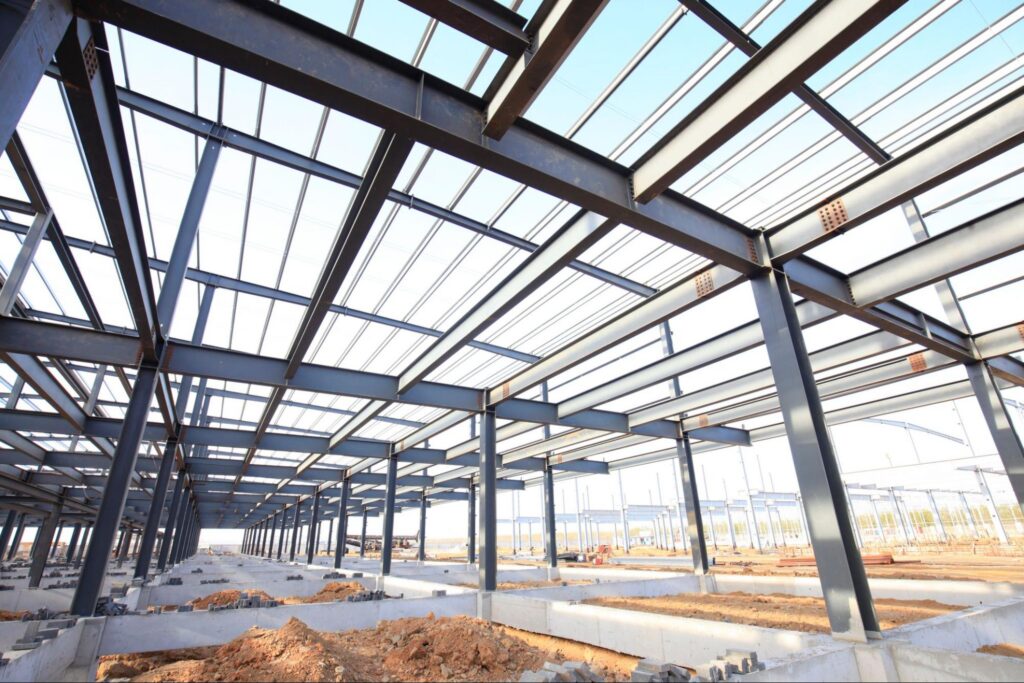
The Short Answer: Steel building maintenance is straightforward when you stay on top of it. A metal building can last six decades or more with routine maintenance that includes two annual inspections, fastener checks, gutter cleaning, and quick repairs to any minor damage. The construction method you choose, the quality of the materials, and the way you protect the metal structure from coastal humidity and storms all play a part in how long your investment lasts. With proper maintenance, a steel structure rewards you with low maintenance costs, strong performance, and a long service life.
Steel buildings have become a popular choice for property owners across central and southern Georgia and the South Carolina Low Country. They go up faster than wood-framed buildings, they hold up against coastal weather, and they cost less to maintain over the years. At DBM Roofing, we have spent over a decade helping homeowners and small business owners design, build, and care for steel structures that last.
How Steel Building Construction Works
Different construction projects call for different building systems. The right choice depends on size, use, and budget.
- Pre-engineered metal buildings: Heavy-duty primary frames, secondary purlins and girts, and metal wall panel and roof panels. Best for commercial, agricultural, and industrial use.
- Cold-formed steel buildings: Lighter steel components, often used for smaller residential garages, workshops, or storage buildings.
- Structural steel buildings: Custom-engineered framing for large commercial projects that require heavy loads or unique designs.
Why Steel Buildings Hold Up So Well
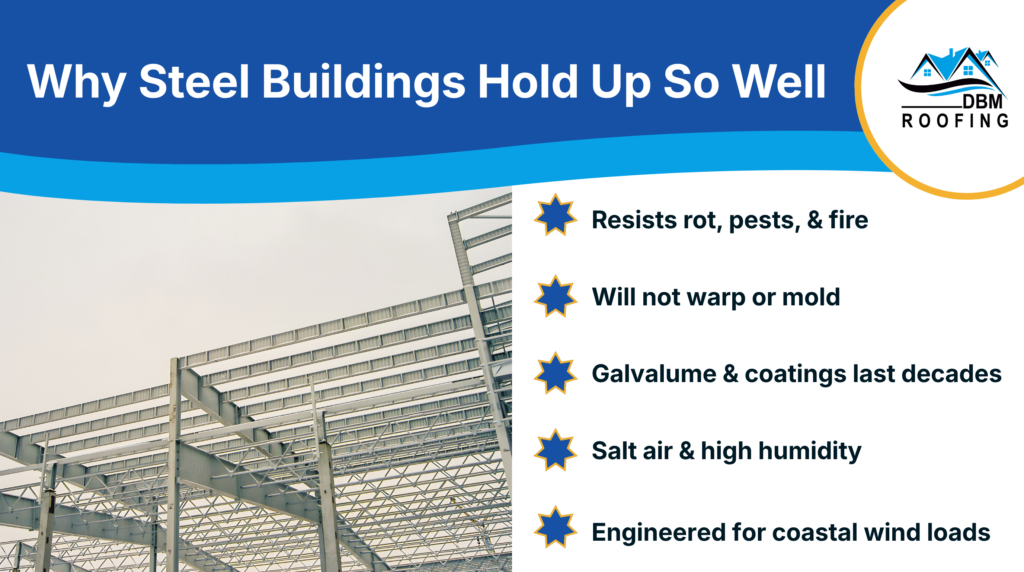
Steel offers performance advantages that wood simply cannot match. Premium grade steel resists rot, termites, mold, and warping. It does not feed pests, and it will not catch fire the way framing lumber does. Most metal structures come with a protective coating like Galvalume or baked-on paint that protects the panels from corrosion for decades.
For property owners in the coastal Southeast, that matters. Salt air, humidity, and tropical storm systems put a tough demand on every part of a building. A well-built steel structure stands up to these unique challenges when it is engineered for the local wind load and properly anchored to the foundation.
Why Steel Building Maintenance Matters
Steel buildings are often marketed as low maintenance, and that is true compared with wood-frame construction. Even so, low maintenance does not mean no maintenance. Skipping routine maintenance is the single most common reason a metal building shows premature wear, costly repairs, or structural damage.
Proper maintenance gives you:
- A longer service life from your metal building
- Fewer costly repairs over time
- Continued warranty coverage from the manufacturer
- Better energy performance and lower utility costs
- Stronger resale value if you sell the property
A simple inspection twice a year, plus quick attention to minor issues, is usually all it takes to keep a steel structure in good shape.
Your Steel Building Maintenance Checklist
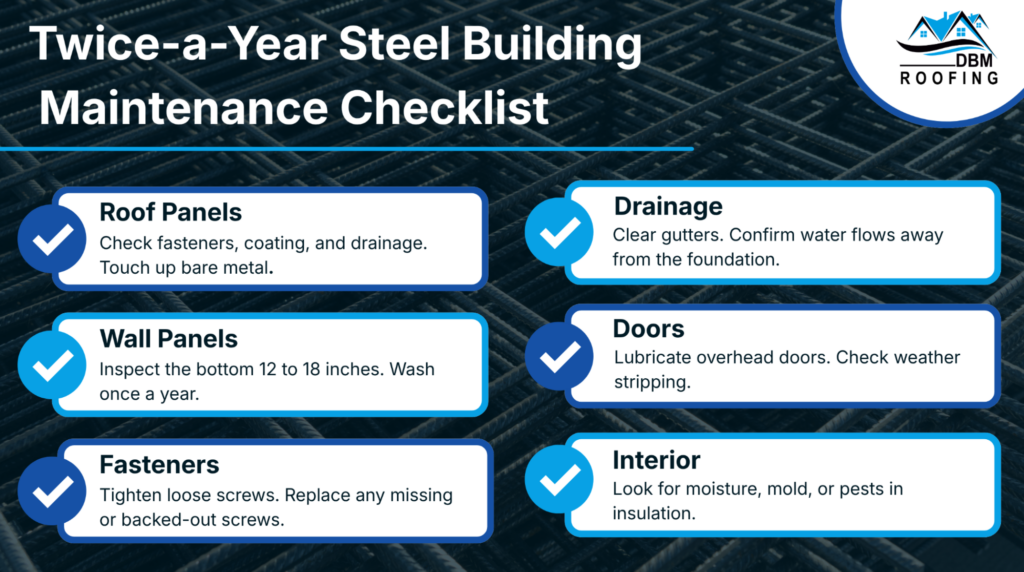
We recommend two thorough inspections each year, one in spring and one in fall, plus an extra walkthrough after any severe storm. Here is what to check.
1. Inspect the Roof Panels
The metal roof carries the heaviest load year-round. Look for:
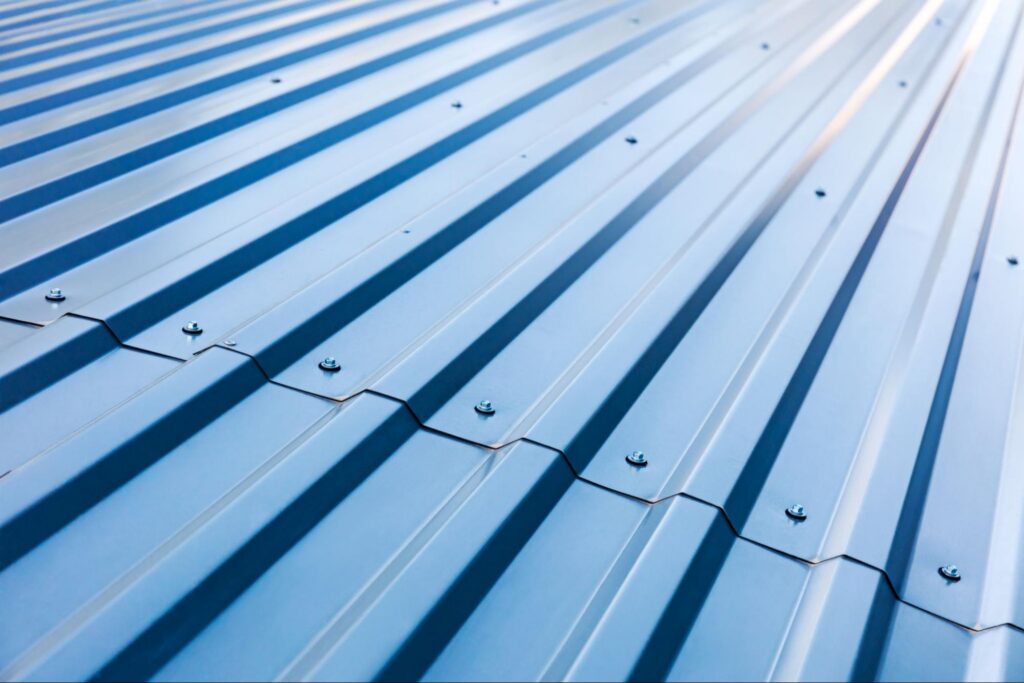
- Loose fasteners, missing screws, or any backed-out screw along the seams
- Scratches, dents, or minor damage to the protective coating
- Standing water or signs of poor drainage
- Sealant wear at penetrations and panel laps
If you spot bare metal where the coating has been scratched, touch it up promptly to prevent rust.
2. Check the Wall Panels
Wall panels are your first line of defense against weather and impact. During your annual inspection, look at the bottom twelve to eighteen inches of every wall panel, where mud and moisture tend to collect. Wash the panels with a soft brush and a gentle cleaner once a year to keep the protective coating intact.
3. Tighten Loose Fasteners
Steel expands and contracts with temperature swings, which can loosen screws over time. A maintenance crew should walk the building each year to tighten any loose fasteners and replace missing screws along the panels and trim.
4. Confirm Proper Drainage
Pooling water at the foundation can lead to structural damage over time. Confirm that gutters are clear, downspouts route water away from the building, and the surrounding grade slopes away from the slab.
5. Service Doors and Openings
Overhead doors, personnel doors, windows, and skylights all have moving parts that need attention. Lubricate hinges and tracks, check weather stripping for gaps, and test each door for smooth operation.
6. Look for Interior Moisture or Pests
Open the building and check the insulation for moisture, mold, or pest activity. A musty smell or damp spots often point to a hidden roof leak or a sealant gap that needs attention before it becomes a bigger problem.
Extra Tip: Log Your Maintenance
Track every inspection, every repair, and every weather event. Most metal building warranties require evidence of regular maintenance, so a simple log can save you a lot of trouble if you ever file a claim.
When To Call Metal Building Contractors
Some tasks fall well within DIY territory, like cleaning panels, clearing gutters, and tightening trim screws. Other work calls for experienced metal building contractors with the right equipment and training:
- Anything involving the roof of a tall building
- Structural concerns such as bent framing, sagging, or shifting columns
- Significant rust, panel replacement, or coating restoration
- Storm damage assessment and insurance documentation
- Professional inspections every two to three years
Why Property Owners Trust DBM Roofing
We have spent over ten years building, repairing, and maintaining roofing across central and southern Georgia and the South Carolina Low Country. Our construction team understands what coastal weather does to a metal building, and we use commercial grade materials, premium grade steel, and proven construction methods on every project.
When you work with DBM Roofing, you get:
- A single, accountable construction team from start to finish
- Honest, itemized pricing with no surprise fees
- Building code expertise across our service area
- Financing and insurance support for larger projects
- A long-term partner for maintenance, repairs, and future expansions
Your steel building is a long-term investment. With proper maintenance and the right construction partner, it should serve your property for decades.
If you are planning a new build or need a maintenance assessment for an existing metal structure, contact DBM Roofing for a free estimate. We will walk your property, answer your questions, and give you a straight plan for keeping your steel building in great shape.
Frequently Asked Questions
How long does a steel building last?
A properly built and maintained pre-engineered metal building can last six decades or more. Routine maintenance, a quality protective coating, and proper installation by an experienced construction team all extend the service life of your steel structure.
How often should I inspect my steel building?
Plan on two inspections each year, one in spring and one in fall, plus an extra walkthrough after any severe storm. A simple inspection takes about an hour and helps you catch minor issues before they turn into costly repairs.
Do steel buildings rust?
Modern steel buildings are built to resist rust. Framing is primed or galvanized, and panels use coatings like Galvalume or baked-on paint that hold up for decades. Address scratches and minor damage to the protective coating promptly to keep rust from taking hold.
What is the difference between a steel building and a pre-engineered metal building?
The terms are often used interchangeably. A pre-engineered metal building is a type of steel building with components designed and fabricated off-site, then assembled on the construction site. Pre-engineered steel building systems are popular for garages, warehouses, self-storage buildings, and commercial use.
Can I maintain my steel building myself, or do I need a contractor?
Basic tasks like washing wall panels, clearing gutters, and tightening loose fasteners can be handled on your own. For roof work on a tall building, structural concerns, significant rust, or storm damage assessment, call experienced metal building contractors like DBM Roofing to keep your warranty and your investment protected.