
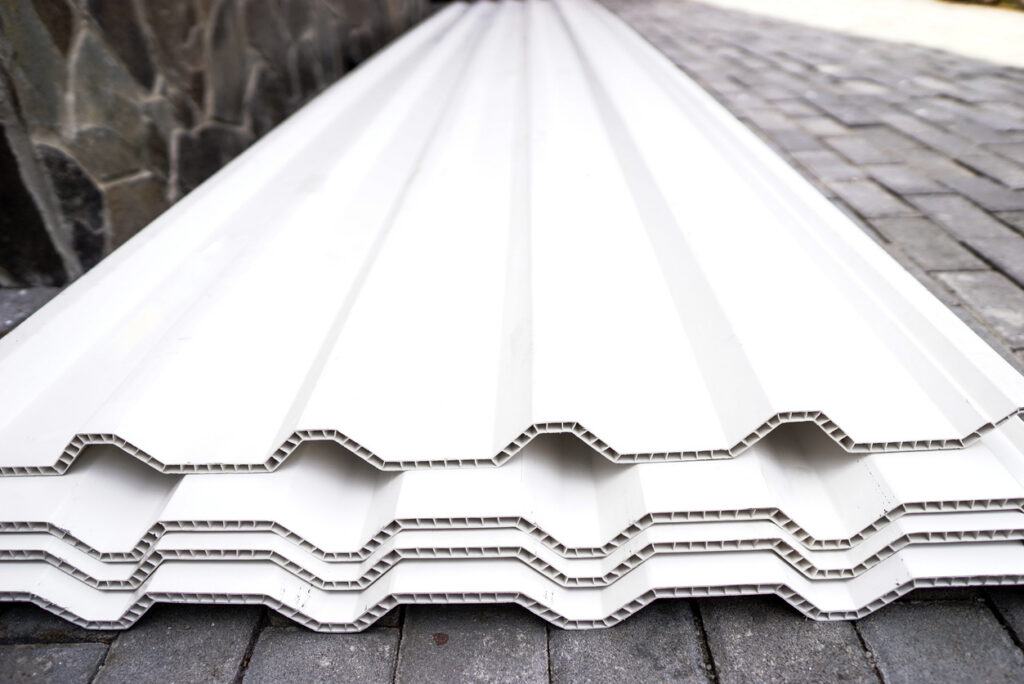
The Short Answer: TPO and PVC are both single-ply membranes with heat-welded seams, and both work well on flat and low slope commercial roofs. The difference is chemistry. PVC (polyvinyl chloride) resists grease, oils, and chemical exposure, which makes it the better pick for restaurants and industrial facilities. TPO (thermoplastic polyolefin) is often the more cost-conscious choice for a standard commercial building and reflects sunlight well. The right call depends on what happens on and inside your building, your budget, and how the full roofing system gets specified.
Commercial property owners run into this choice whenever a flat or low slope roof needs replacing, and from the ground the two membranes look nearly identical. Both are single-ply, both weld at the seams, and both can be specified in reflective white. The real differences live in the details, which is why it pays to know how TPO roofing and PVC roofing each perform before you commit to a commercial roof that has to hold up for decades.
TPO and PVC at a Glance
Both are single-ply thermoplastic membranes that arrive in rolls and get their seams joined with hot air. Those heat-welded seams give each one a strong, continuous bond. They share the same basic job, so on paper they look alike.
TPO is a blend of polypropylene and ethylene propylene rubber, usually white, and reinforced for strength. It has become one of the most-installed single-ply products in the United States, mostly because it pairs reflectivity with a competitive price per square foot.
PVC is built from polyvinyl chloride and includes plasticizers that keep the membrane flexible. A PVC roofing membrane stands out for chemical resistance, which is why it shows up on restaurant roofs and industrial buildings.
The real story is where they split apart.
Where TPO and PVC Actually Differ
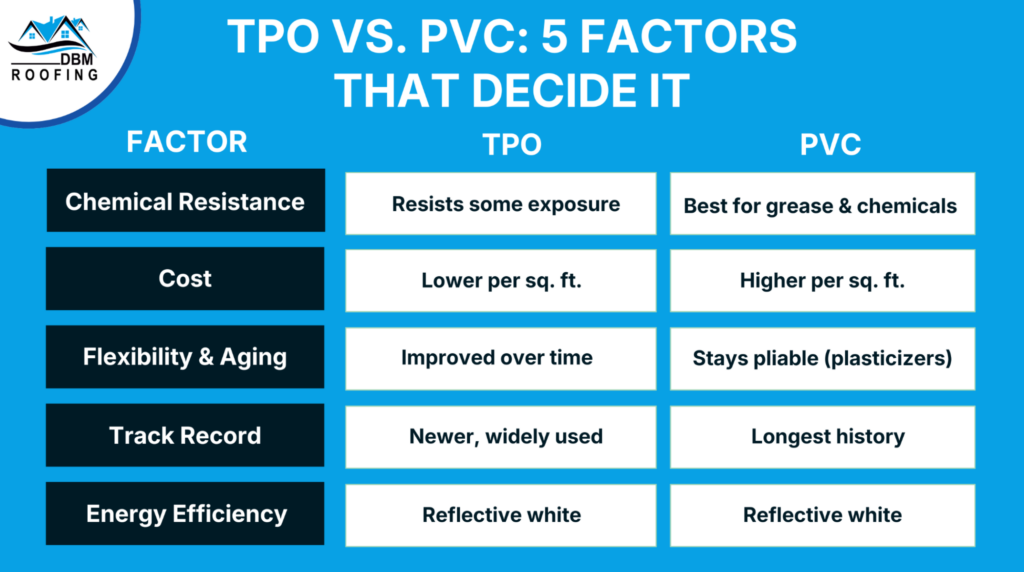
Five factors usually decide the matchup:
Chemical Resistance
This is PVC’s home turf. A PVC roof shrugs off grease, oils, animal fats, and many chemicals, so it holds up where rooftop kitchen exhaust or industrial discharge would wear down other membranes. TPO resists some chemical exposure, but not at the same level. If your building vents grease onto the roof, PVC is the safer roofing material.
Cost
TPO tends to come in lower per square foot, which makes it the more cost-conscious option for a standard commercial roof. The gap isn’t fixed, though. Installed price moves with membrane thickness, attachment method, insulation, tear-off needs, and local labor, so the only real number is a quote on your actual building.
Flexibility and Aging
PVC stays pliable thanks to its plasticizers, which helps with movement and detail work around penetrations. Over many years, some older PVC formulations could lose plasticizers and stiffen, though modern products have improved on that. TPO has also gotten better since its earlier formulations. Both hold up over the long term when specified and installed correctly.
Track Record
PVC has the longest history of any single-ply membrane, with roofs in the field for decades. That gives a building owner a long view of real-world performance. TPO is newer but now widely used across the commercial roofing industry.
Energy Efficiency
White versions of either membrane reflect UV rays and sunlight, which can lower roof surface temperature and reduce cooling demand. Neither has a built-in edge here; what matters is the specific product’s reflectivity. The Cool Roof Rating Council keeps a directory of solar reflectance and thermal emittance ratings if you want to compare options side by side.
What Georgia and South Carolina Add to the Decision
Our region runs hot and humid with strong UV radiation and the occasional severe storm, so a few local factors weigh on the choice.
Reflectivity earns its keep here. A white TPO or PVC membrane can cut roof surface temperature through the long summer and trim energy costs, though the actual energy savings depend on insulation, HVAC use, and how the building runs. We don’t deal with the deep cold of colder climates, so freeze-related concerns matter less than heat, UV resistance, and moisture handling.
Wind is the bigger variable. Both membranes can be engineered for high-wind conditions, but that performance comes from the whole roof system: membrane thickness, attachment method, fastener pattern, roof deck, edge details, and local code. The membrane type alone doesn’t decide how a roof rides out a storm, which is why the install matters as much as the product.
How to Pick Between Them
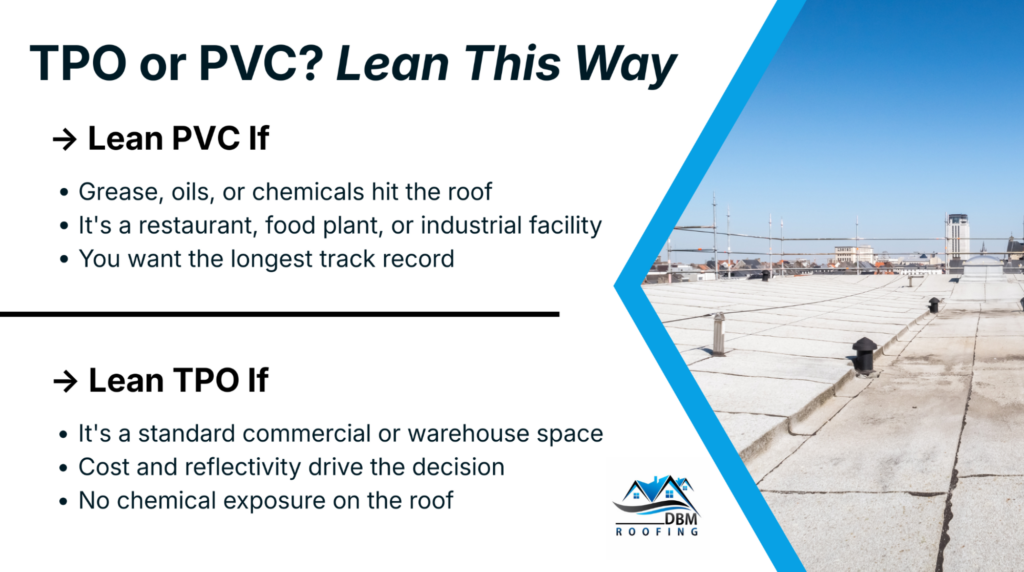
A simple way to frame it:
- Lean PVC if your roof handles grease, oils, or chemical exposure, which is common on restaurants, food plants, and industrial facilities, or if you want the membrane with the longest track record.
- Lean TPO if your building is a standard commercial or warehouse space where cost and reflectivity drive the decision and chemical exposure isn’t a factor.
Neither is the automatic winner. A roofing contractor who walks your roof can weigh the use, the budget, and the conditions, then point you to the right roofing system. Installation and proper maintenance look about the same for both, so the membrane choice usually hinges on the five factors above rather than on upkeep.
Don’t Overlook EPDM
A third single-ply option is worth a look. EPDM roofing uses ethylene propylene diene monomer, a synthetic rubber, and comes in black or reflective white. Its seams are usually bonded with tape or adhesive rather than heat-welded, and it has a long service record on low-slope roofs. We install all three, so it’s worth putting EPDM on the table alongside TPO and PVC.
Talk to a Local Commercial Roofer
DBM Roofing installs and repairs TPO, PVC, and other commercial roofing systems across central and southern Georgia and the South Carolina Low Country, with more than a decade of work on flat and low slope roofs. If you own a commercial building in Savannah, Statesboro, Brunswick, or Mount Pleasant, we can inspect your roof, talk through the trade-offs, and help you weigh the options. Financing and insurance help is available too. Need a repair on an existing membrane first? Our commercial roofing repair team can handle that before water reaches the deck.
Reach out for a roof inspection, and we’ll give you straight answers about whether a TPO or PVC roofing system fits your property.
Frequently Asked Questions
How long does a TPO or PVC roof last?
A well-installed single-ply roof commonly runs 20 to 30 years, with membrane thickness, attachment, and upkeep all moving that number up or down. A manufacturer warranty covers defects under its terms and isn’t a promise of service life, so regular maintenance still drives how many years you actually get out of the roof.
Can a new membrane go over my existing roof?
Sometimes. If the current roof is dry and structurally sound, a recover, meaning the new membrane goes over the old one, can save the cost of a full tear-off. Trapped moisture or a damaged deck usually calls for a tear-off instead. An inspection tells you which path your building needs.
What membrane thickness should I pick?
Single-ply membranes come in different thicknesses, often 45, 60, or 80 mils. A thicker sheet costs more per square foot but resists punctures and weathering better, which can pay off on a roof with foot traffic or strong UV exposure. A roofing contractor can match the thickness to how the roof gets used.
Can you walk on a TPO or PVC roof?
Yes, for service and inspections. Neither membrane is meant for constant foot traffic on the bare sheet, though, so areas with regular access usually get walkway pads to protect the surface.
What does the warranty actually cover?
Most manufacturer warranties cover material defects, and some add labor coverage when a certified contractor installs the system. Terms vary by product and by how the roof is maintained, so read the conditions before you sign. Our financing and insurance page walks through the payment and claim side.
Can a single-ply roof be repaired instead of replaced?
Often, yes. A punctured membrane or an open seam is usually repairable without touching the rest of the roof. Replacement makes more sense once the membrane is failing across large areas or the deck below is compromised.