

The Short Answer: To choose a roofing company in Savannah, hire a local, insured contractor with real experience on this coast, ask for honest assessments and a written estimate, and check the warranty and workmanship before you sign. The right company gives you straight answers about repair versus replacement and stands behind the work after the job is done.
A roof in the Low Country takes a beating. Salt air off the coast, months of thick humidity, and the storms that roll through every summer all wear down materials faster than in drier parts of the state. When it comes time for roof repair or a full roof replacement, the roofing company you hire shapes how well that work holds up over the next 20 years.
Savannah has no shortage of roofing contractors, and they don’t all do the same quality of work. The steps below help you tell the dependable companies from the rest before you sign anything, whether the job is a small roof repair on a house in Richmond Hill or a new roof on a commercial property near downtown Savannah.
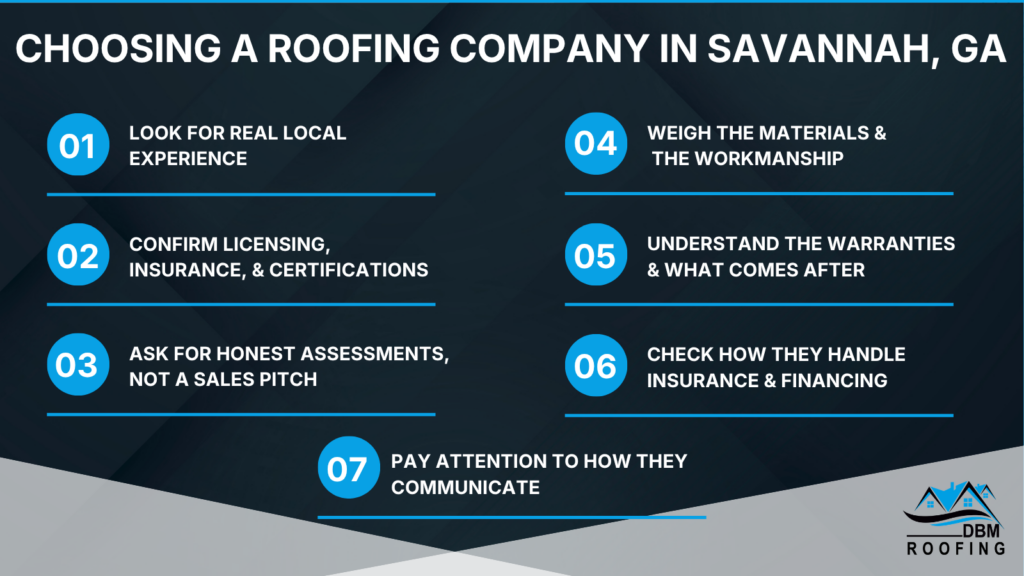
1. Look for Real Local Experience
Savannah’s climate creates roofing issues you won’t run into inland. A roofing contractor who works here every week knows how salt air corrodes fasteners, how humidity feeds rot under an old roof deck, and how fast storm damage shows up after a rough summer. Ask how long a company has worked in the area and what kind of roofs they handle most often.
A crew that mostly installs asphalt shingles may not be the right fit for a commercial job, and a company built around commercial roofing might not give a residential re-roof the attention it needs. DBM Roofing has spent over a decade on roofs across Savannah GA and the surrounding area, on homes and businesses alike, so we know what this coast does to a roof and how to build for it.
2. Confirm Licensing, Insurance, and Certifications
This is the step people skip, and it can cost them. A roofing company should carry liability insurance and workers’ compensation, and it should be willing to show proof without any hesitation. If a worker gets hurt on your property and the contractor isn’t covered, that liability can land on you.
Manufacturer certifications matter too. They mean the crew has been trained to install specific premium materials the correct way, and that training often unlocks better warranty coverage on your new roof. A certified installer is also less likely to leave you with the kind of workmanship problems that turn into a roof leak two winters later.
3. Ask for Honest Assessments, Not a Sales Pitch
Some contractors push a complete roof replacement when a repair would have held for years. Others patch a roof that is clearly past its life. Neither one is doing you any favors. A good roofing contractor walks the roof, checks the attic, and gives you honest assessments about what your roof actually needs. As Field Pro Brandon Lowe puts it, “I won’t tell them repair or replace until I put my eyes on it. Then just be honest with them.”
Get all of it in writing. A written estimate should spell out the work, the materials, and the timeline so you can compare quotes on equal footing. If a bid is vague or a contractor pressures you to sign on the spot, treat that as a warning sign.
A solid written estimate usually covers:
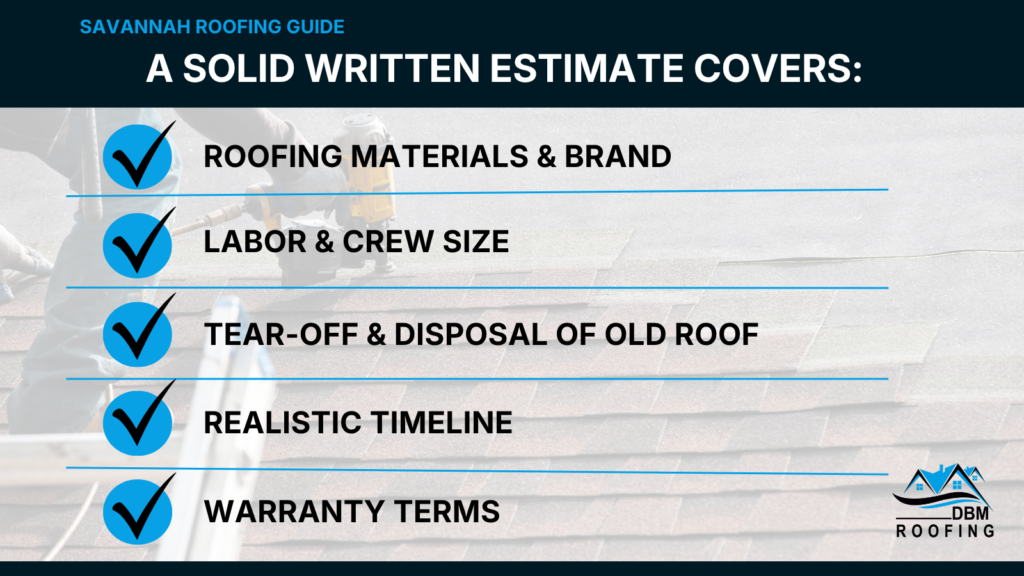
- The roofing materials and brand, down to the shingle line or membrane type
- Labor and the crew size assigned to the job
- Tear-off and disposal of your old roof
- A realistic timeline for the work
- Warranty terms for both the materials and the workmanship
4. Weigh the Materials and the Workmanship
The roofing materials you pick matter, but installation decides how long they hold up. Ask what a company installs and why they recommend it for your home. Asphalt shingles are still the common choice for houses because of cost and curb appeal. Metal roofing runs higher up front and stands up better to high winds and severe weather, which counts for a lot this close to the coast.
Commercial buildings usually call for flat or low-slope systems, and each one suits a different budget and roof. DBM Roofing installs TPO roofing, PVC roofing, EPDM roofing, built-up roofing, and modified bitumen roofing, along with roof coating for buildings that need more life out of an existing surface.
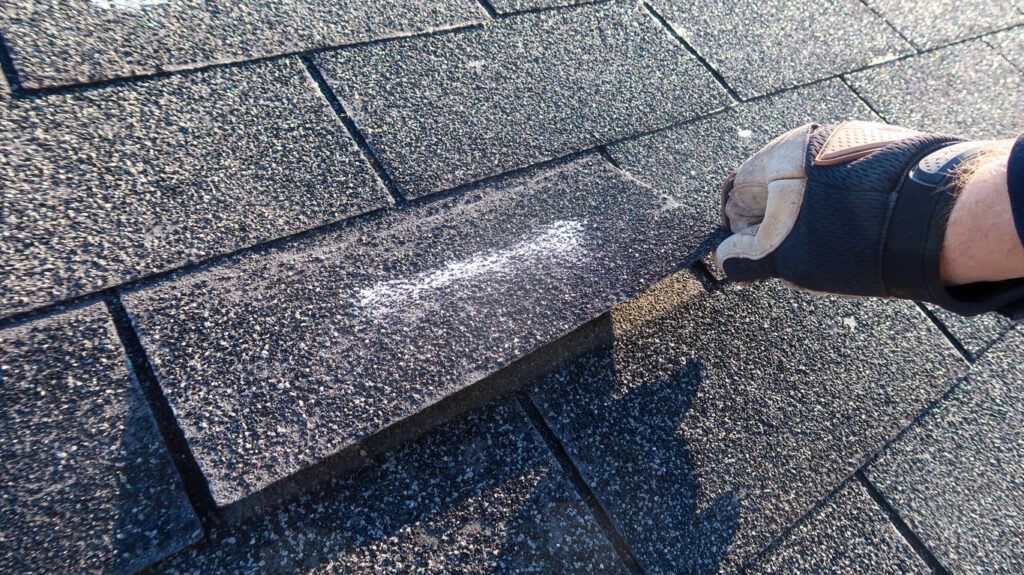
Quality workmanship shows up in the small details: flashing sealed around chimneys and vents, tight valleys, clean lines along the edges. Those are the exact spots where a roof leak tends to start, so they tell you more about a crew than the finished color ever will.
5. Understand the Warranties and What Comes After
A new roof is a long-term investment, so ask what long-term protection you actually get. Two warranties come with most jobs: the manufacturer warranty on the materials and the workmanship warranty from the contractor. Get the length and the terms of both in writing, and read what voids them.
Ask what regular maintenance the coverage requires. Some warranties depend on you scheduling preventative maintenance or keeping records of inspections. A company that offers dependable service and stays reachable after the install is worth more than one that goes quiet once the check clears. The point of a warranty is that someone picks up the phone when you need them.
6. Check How They Handle Insurance and Financing
Storm damage claims get complicated in a hurry. A roofing contractor who has worked with your insurance company before knows how to document damage the right way and can help move your insurance claim along instead of leaving you to fight it alone. That support saves you real time when your roof needs attention now.
Cost is a factor for most people, and a full roof replacement is a large expense to absorb at once. Ask whether the company offers flexible financing options so you can spread the cost out. DBM Roofing works with homeowners and business owners on both insurance claims and financing to keep a roof replacement within reach.
7. Pay Attention to How They Communicate
How a company treats you before you sign tells you a lot about the entire process. Do they return calls in a timely manner? Do they explain roofing issues in plain language instead of talking over your head? For an emergency roof repair after a storm, response time is close to everything. A roof leak left alone for a week does far more damage than the same leak handled the next morning.
Customer satisfaction comes down to something simple: does the contractor do what they said they would, when they said they would. A company that communicates clearly through a small repair will handle a complete roof replacement the same way.
Get a Straight Answer About Your Roof
We have spent over ten years installing, repairing, and maintaining roofs across central and southern Georgia and the South Carolina Low Country. Our team understands what coastal weather does to a roof, and we use premium materials and proven methods on every roof repair and commercial roofing project.
When you work with DBM Roofing, you get:
- A single, accountable roofing team from start to finish
- Honest, itemized pricing with no surprise fees
- Manufacturer-certified installation on every new roof
- Insurance and financing support for larger projects
- A long-term partner for maintenance, repairs, and future work
Your roof is a long-term investment. With regular maintenance and the right roofing company, it should protect your home or business for decades.
If you are planning a full roof replacement or need an inspection on an existing roof, contact DBM Roofing for a free estimate. We serve Savannah, Richmond Hill, Brunswick, Statesboro, Hinesville, Mount Pleasant, North Charleston, and the surrounding area. We will walk your roof, answer your questions, and give you a straight plan for what it needs and nothing it doesn’t.
Frequently Asked Questions
How do I know if I need roof repair or a full roof replacement?
It comes down to the age of the roof and how widespread the damage is. A few missing shingles or a single roof leak usually calls for roof repair. If the roof is near the end of its life, or you are seeing problems across several sections, a full roof replacement often costs less over time than paying for repeated fixes. A roofing contractor can walk the roof and give you an honest assessment either way.
How much does a new roof cost in Savannah?
The price depends on the size of the roof, the roofing materials you choose, and the condition of the deck underneath. Asphalt shingles sit at the lower end, and metal roofing runs higher up front. Ask for a written, itemized estimate so you can see exactly what you are paying for, and ask about financing options if you want to spread the cost out.
Should I choose asphalt shingles or metal roofing for a coastal home?
Both hold up on the coast. Asphalt shingles cost less and give you good curb appeal. Metal roofing costs more but handles high winds and severe weather better, which matters this close to the water. A local roofing company can help you weigh the trade-offs for your home and budget.
Can you walk on a TPO or PVC roof?
Yes, for service and inspections. Neither membrane is meant for constant foot traffic on the bare sheet, though, so areas with regular access usually get walkway pads to protect the surface.
Will my roofing company handle the insurance claim?
A roofing contractor who has worked with your insurance company before can document storm damage properly and help move your insurance claim along. That support saves you time and stress. Ask how involved a company gets in the claims process before you hire them.
How fast can you get out for an emergency roof repair after a storm?
Response time is one of the clearest signs of dependable service. After severe weather, a good company prioritizes emergency roof repair to stop a roof leak before it reaches the inside of your home. Ask about typical response times when you first call.