
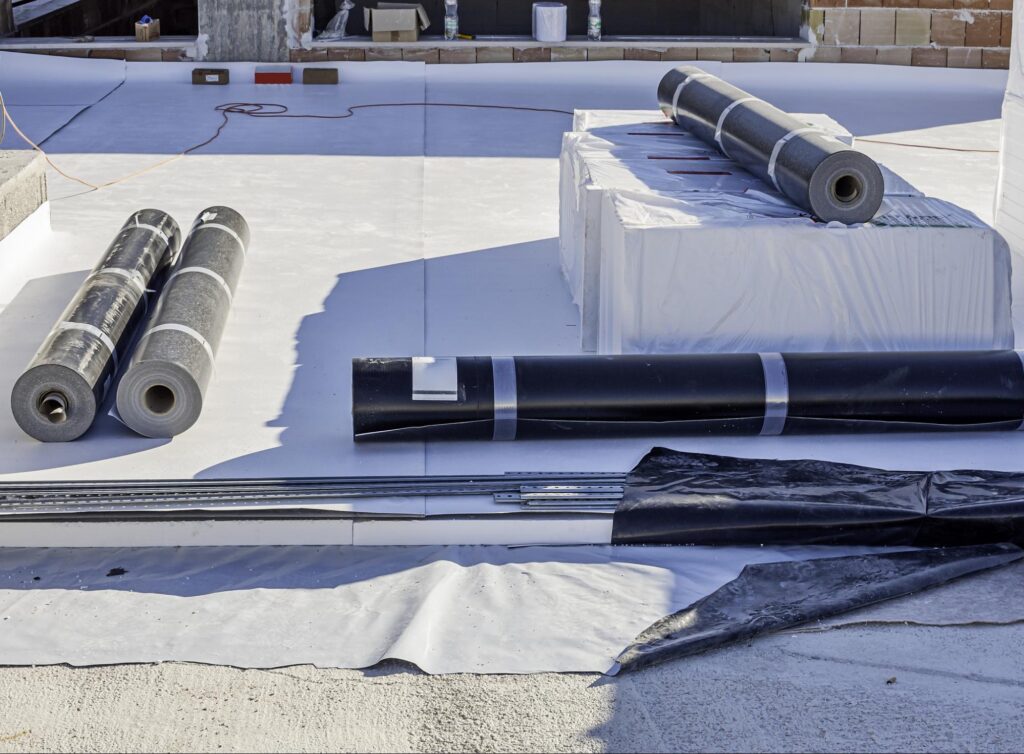
The Short Answer: TPO roofing is a reflective, single-ply membrane built for flat and low slope roofs. Crews roll out the sheets, overlap them, and hot-air weld the seams into one watertight membrane assembly. For property owners in Georgia and the South Carolina Low Country dealing with high cooling bills and summer heat, a white TPO membrane reflects sunlight and UV rays away from the roof deck, which can lower the roof surface temperature and ease the cooling load. Designed and installed for local wind conditions, it’s a practical option for many buildings, and it’s often cost-effective, though the installed price depends on the specifics of your roof.
TPO has become one of the most-installed products in the commercial roofing industry. You’ll find it on warehouses, retail centers, office buildings, and modern homes with flat roof sections, largely because it pairs a low price tag with strong energy efficiency. The name stands for thermoplastic polyolefin, a flexible plastic-and-rubber blend that ships in large rolls and gets welded together on the roof.
Knowing that much puts you ahead of most buyers, but a few details decide whether TPO is the right call for your building. Below, we cover what a TPO roof is made of, where it performs well, and how to tell whether it fits.
What TPO Roofing Is Made Of
Thermoplastic polyolefin (sometimes called thermoplastic olefin, or TPO) blends polypropylene with ethylene propylene rubber. Manufacturers turn that mix into a single-ply membrane that ships in rolls, usually white, gray, or tan. The membrane gets fused at the seams with hot air, which creates a watertight bond across the whole roof.
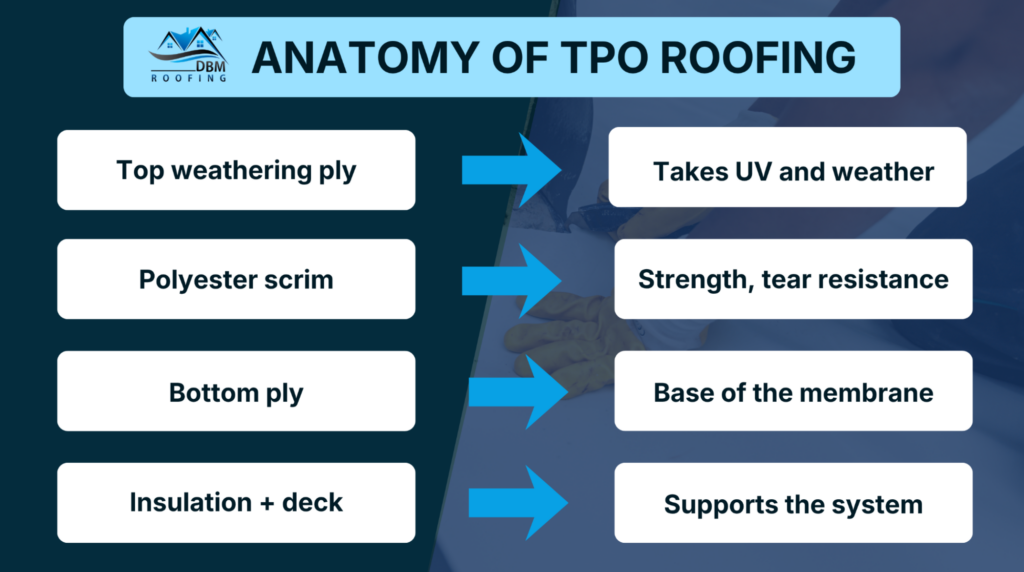
A reinforced TPO membrane is built in three plies: a top weathering ply that takes on UV rays and weather, a polyester scrim in the middle for reinforcement, and a bottom ply. The scrim gives the sheet its strength and helps it resist tears and punctures. The top ply isn’t meant to handle regular foot traffic on its own, so areas with routine roof access usually need walkway pads or similar protection.
TPO sits in the same family as two other popular single-ply membranes: EPDM roofing and PVC roofing. Each one handles heat, chemical exposure, and installation a little differently, which we’ll get into next.
How TPO Compares to Other Single-Ply Membranes
Single-ply roofing covers a few different products, and property owners often weigh a TPO membrane against the alternatives:
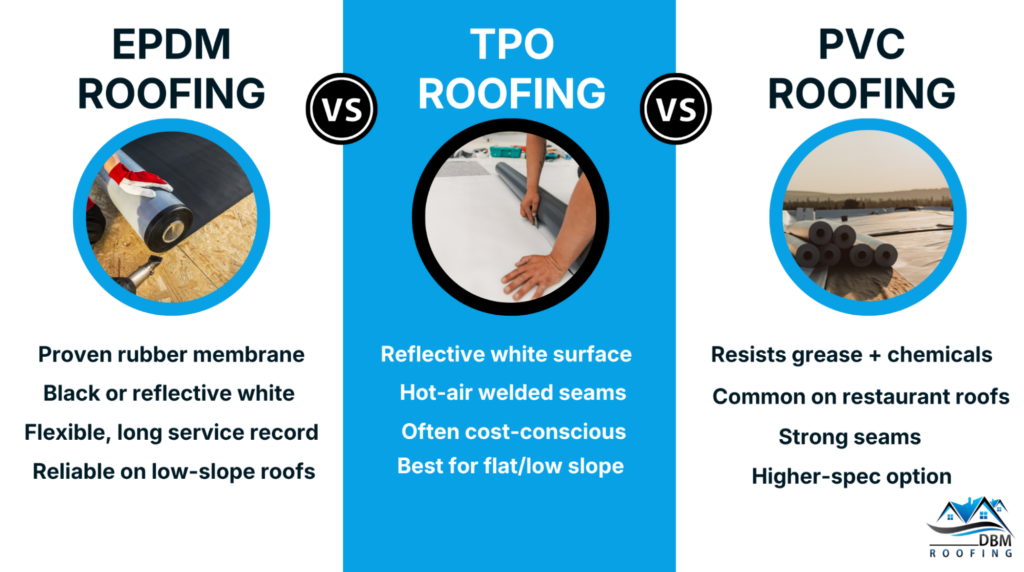
- TPO vs. EPDM: EPDM most often comes as a black rubber membrane that absorbs more solar heat, while a white TPO roof membrane reflects it. White and reflective EPDM products do exist, though, so compare the actual reflectivity of the specific product rather than assuming every EPDM roof is black. In warmer climates like coastal Georgia and the South Carolina Low Country, that reflectivity matters for energy savings.
- TPO vs. PVC: Both are thermoplastic, and both weld at the seams. PVC tends to handle grease and chemical exposure better, which is why it’s often chosen for restaurant roofs. TPO can be a more cost-conscious option depending on the specified system.
- TPO vs. older built-up systems: Many aging flat roofs use built-up roofing or modified bitumen roofing, which stack multiple layers of asphalt. A TPO roofing membrane is lighter and faster to put down.
If your existing roof uses one of these older systems, a roofing contractor can tell you whether TPO makes sense as a replacement.
Why Property Owners Choose TPO
Energy efficiency tends to top the list. A reflective white surface bounces sunlight and UV rays away from the roof deck instead of soaking up heat, which can lower the roof surface temperature and reduce cooling demand. How much you actually save depends on insulation levels, HVAC use, building operations, membrane color, and local climate, and a reflective roof can carry a small heating penalty in winter. A few other reasons TPO systems stay popular:
- Energy savings: A light-colored membrane can cut cooling demand in hot climates, with the real-world payoff varying by building. The Cool Roof Rating Council maintains a directory of solar reflectance and thermal emittance ratings if you want to compare products side by side.
- Cost: TPO is often a cost-effective choice, though installed price varies with tear-off needs, insulation, deck repairs, membrane thickness, flashing details, attachment method, warranty level, and local labor.
- Ease of installation: Welded seams and a relatively simple buildup can make for a faster installation method, which can hold down labor costs.
- Wind performance: A TPO roof can be engineered for high-wind conditions, but that performance comes from the whole system, including membrane thickness, attachment method, fastener pattern, deck, edge details, and local code, not from the membrane alone.
Where TPO Roofing Works Best
A TPO roofing system is built for flat roof and low-slope roof applications. You’ll see it most often on the following:
- Commercial buildings like offices, shopping centers, and retail spaces
- Industrial buildings and warehouses
- Modern homes with flat or low-pitch sections
The membrane handles thermal expansion well, flexing as the roof heats up and cools down across the day without cracking. That flexibility helps in our region, where summer heat and sudden storms put a roof through real swings in weather conditions.
For steep-slope homes with traditional shingles or tile, TPO usually isn’t the right fit. It works best on the flatter roof systems where water needs to drain across a wide surface.
What TPO Installation Looks Like
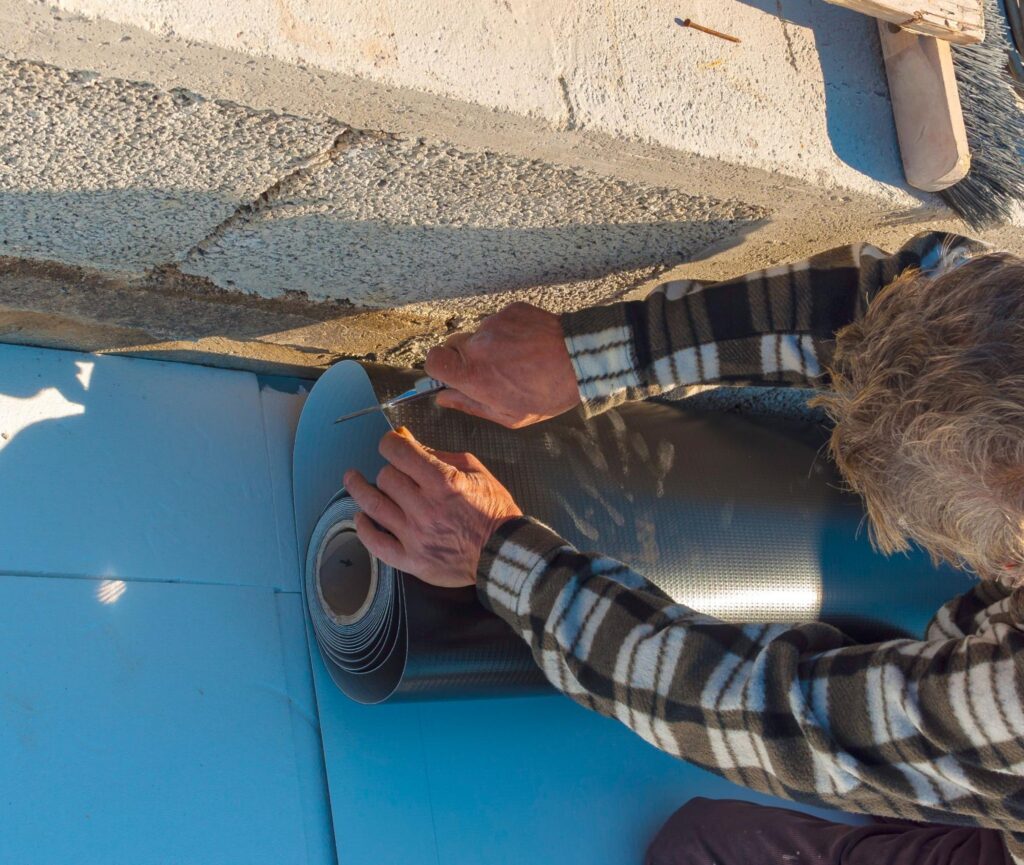
Installation starts at the roof deck. The crew either removes the existing roof or, in some cases, sets the new membrane over it. From there, they attach insulation, roll out the TPO membrane, and weld the seams with hot air. A few attachment methods are common:
- Mechanically fastened: Screws and plates anchor the membrane to the deck.
- Fully adhered: Adhesive bonds the membrane across the full surface.
- Induction-welded: Plates are fastened to the deck, then the membrane is welded to the plates electromagnetically, which keeps the surface clean of exposed fasteners.
- Ballasted: Stone or pavers hold the membrane down. This is less common for TPO than for EPDM and can be restricted in high-wind areas because of the added weight and projectile risk.
The right method depends on your building, your budget, and local wind requirements. A roofing contractor who knows the area can recommend the approach that fits.
Maintenance and Lifespan
A TPO roof asks for less upkeep than older systems, though routine maintenance still matters. A properly specified and maintained TPO roof often lasts around 20 to 30 years, and regular inspections help you reach the high end of that range. Keep in mind that a manufacturer warranty covers defects under its terms and isn’t a guaranteed service-life estimate. Basic care looks like this:
- Regular inspections: Book a check at least once a year, plus another after severe weather.
- Keep the surface clear: Pull off debris that traps moisture or blocks drains.
- Watch the seams: Heat-welded seams are a major part of the waterproofing system and should be inspected for damage, separation, or deterioration. Catching problems early keeps water out.
Facility managers and building owners who stay on top of these tasks get more years out of the roof and fewer surprise repairs. When a leak does show up, commercial roofing repair handles it before water reaches the deck. On an eligible existing roof, a roof coating can refresh reflectivity and add service life, but only after an inspection confirms the roof is a good candidate. A coating won’t fix widespread membrane failure, trapped moisture, or major substrate problems.
Is TPO the Right Roofing Material for You?
TPO is a reliable roofing solution for flat and low slope roofs, especially in warmer climates where reflectivity pays off. It’s often cost-effective, installs efficiently, and can be engineered to handle the heat and high winds common across Georgia and South Carolina when the full system is specified for local conditions. For steep residential roofs, other roofing materials make more sense, and a good contractor will tell you so.
Making an informed decision comes down to your building type, your budget, and your climate. That’s where talking to a roofing contractor who works in your area helps a building owner skip the guesswork.
DBM Roofing installs and repairs TPO and other commercial roofing systems across central and southern Georgia and the South Carolina Low Country, with more than a decade of work on flat roofs, low slope roofs, and steel building projects. If you manage a commercial building in Savannah, Richmond Hill, Statesboro, or Mount Pleasant, we can look at your roof and walk you through your options.
Reach out for a roof inspection, and we’ll give you straight answers about whether a TPO roofing system fits your property.