
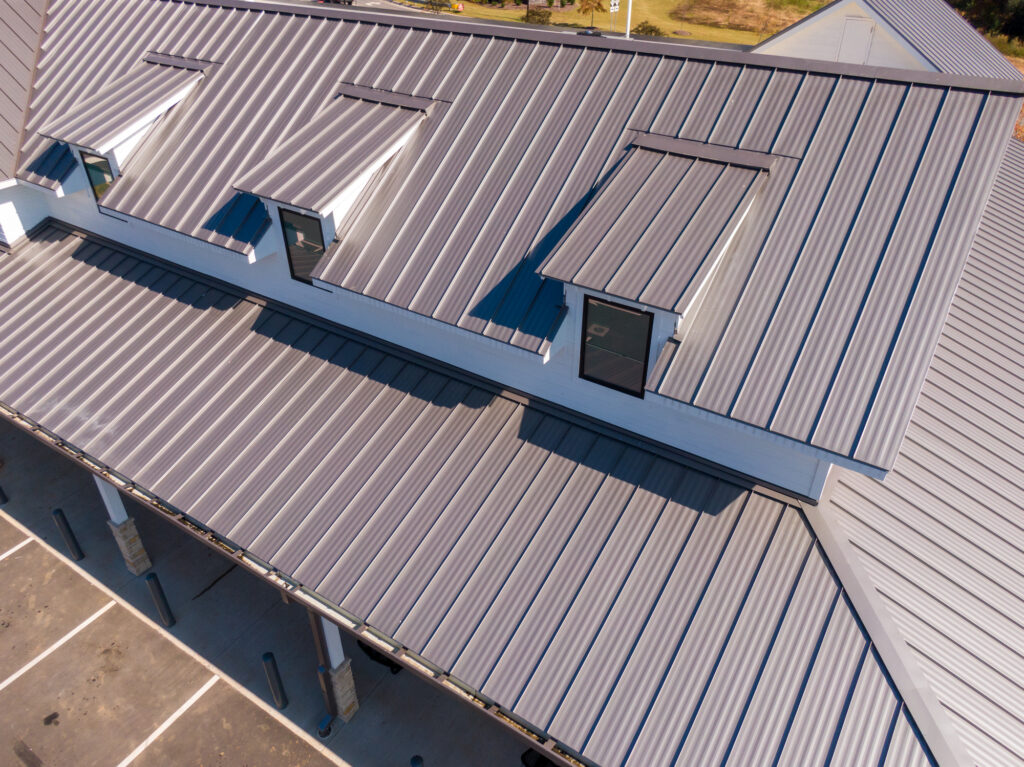
The Short Answer: Commercial roof maintenance in Georgia and South Carolina calls for a seasonal approach. The coastal Southeast brings humidity, salt air, heavy summer rain, and hurricane season, and a durable single-ply system like TPO is one of the best choices for standing up to these conditions. Two professional roof inspections per year, prompt attention to small issues, and a well-timed roof coating will extend the life of your roof, protect your warranty, and prevent the kind of expensive repair work that comes from neglected roof damage. A proactive approach is the most cost-effective way to protect your property.
If you are a business owner managing a commercial building anywhere from Savannah to Mount Pleasant, you already know the climate is tough on a roof. The combination of moisture, salt air, intense sun, and tropical storms wears down almost every roofing material faster than it would in a milder region. Regular maintenance keeps your investment protected and helps you spot potential problems before they turn into a roof leak, business interruptions, or premature roof failure.
Why Commercial Roof Maintenance Matters in This Region
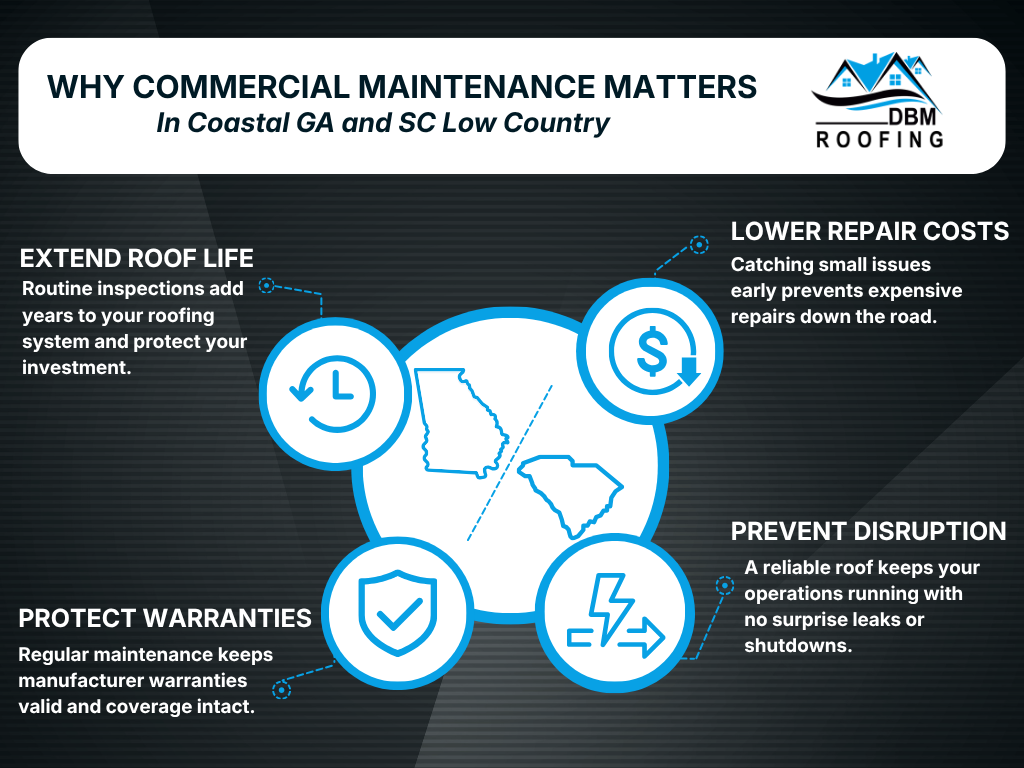
Commercial roofs in coastal Georgia and the South Carolina Low Country face conditions that most parts of the country never see. Salt air corrodes flashing and fasteners. High humidity invites mold and trapped moisture. Summer storms drop heavy rain in short bursts, and hurricane season can bring wind speeds that test every seam of the building envelope. Many property owners in this region rely on TPO, a durable single-ply system engineered to stand up to exactly these conditions.
A good roof maintenance program gives business owners:
- Longer service life from your TPO system
- Continued coverage from manufacturer warranties
- Lower repair costs over time
- Fewer interruptions to your business operations
- Stronger documentation for insurance claims
A single missed inspection can turn a minor flashing issue into thousands of dollars in interior water damage. A consistent schedule of preventative maintenance is the simplest way to avoid that outcome.
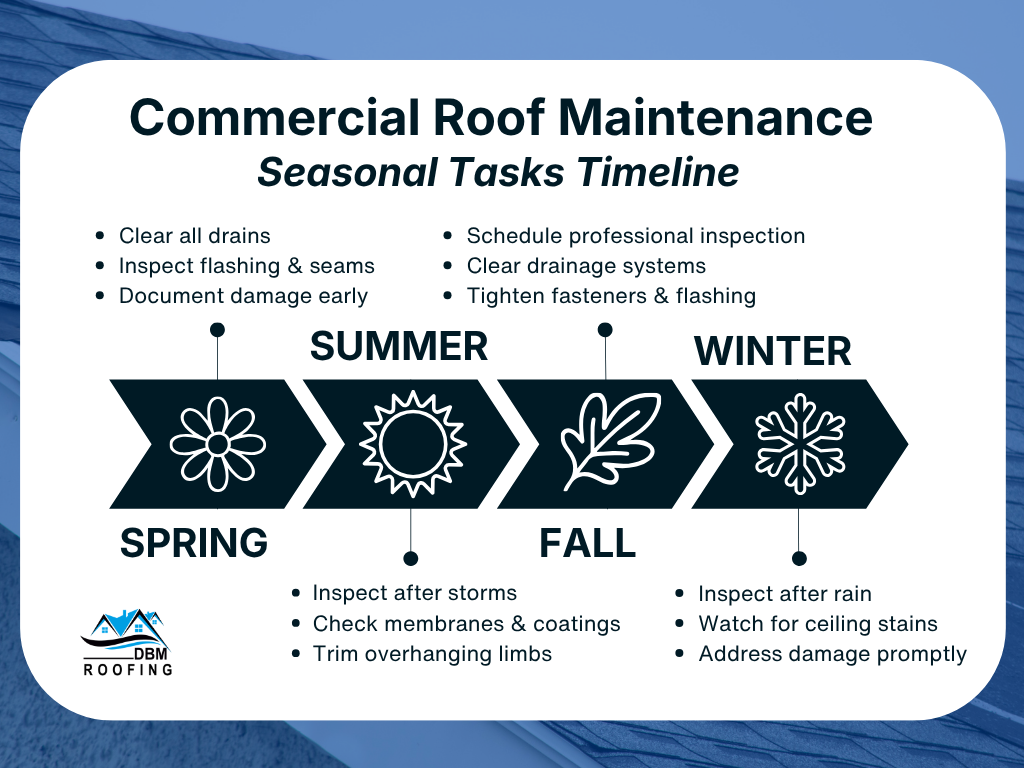
Spring Maintenance: Recover from Winter Weather
Spring is the first chance to assess what winter rain and wind left behind. Even a mild Southeast winter can loosen flashing, clog drains, and expose small leaks.
Tasks to handle in spring:
- Clear all drains, scuppers, and gutters of leaves and debris
- Inspect flashing around HVAC units, vents, and roof penetrations
- Check seams and laps on a TPO, PVC, or EPDM membrane for any lifting or separation
- Look for ponding water that may indicate sagging or drainage issues
- Document any minor damage and schedule minor repairs before summer storms arrive
A thorough inspection in spring sets the baseline for the rest of the year and gives you time to handle small repairs before the wet season ramps up.
Summer Maintenance: Manage Heat and Storm Pressure
Summer in the coastal Southeast means high heat, intense UV exposure, and afternoon thunderstorms. All of this puts strain on roofing membranes, coatings, and rooftop equipment.
Tasks for summer:
- Inspect the roof after any major storm or high-wind event
- Look for blistering, bubbling, or shrinkage on single-ply membranes
- Check rooftop HVAC units for leaks, vibration damage, or loose connections
- Confirm that any roof coating you have applied is still bonded and intact
- Trim back tree limbs that hang over the roof edge
Summer is also when reflective coatings prove their value for energy efficiency. A quality coating can reduce rooftop temperatures, lower cooling costs, and extend the life of the underlying membrane.
Fall Maintenance: Prepare for Hurricane Season and Cooler Weather
By fall, your roof has taken a full summer of heat and storms. This is the most important inspection of the year because hurricane season peaks in September and October, and any weak point will be tested.
Tasks for fall:
- Schedule a thorough inspection with a qualified roofing contractor
- Clear all drainage systems before fall rain begins
- Confirm fasteners and flashing are tight around every penetration
- Inspect the roof edge and parapet walls for cracking or separation
- Check that rooftop equipment anchoring is secure
- Review your maintenance log and confirm any pending repairs are complete
Fall is also a smart time to evaluate whether your TPO membrane is a good candidate for a restoration coating before it reaches the end of its service life.
Winter Maintenance: Watch Moisture and Cold Snaps
Winter in coastal Georgia and South Carolina is mild compared with the rest of the country, but cold snaps, heavy rain, and occasional freezing temperatures still affect a commercial roof.
Tasks for winter:
- Inspect the roof after every significant rain event
- Watch interior ceilings for new stains that may indicate a roof leak
- Confirm drainage paths are clear and water flows freely
- Look for caulking and sealant cracks around penetrations
- Address minor damage promptly to prevent freeze damage during cold snaps
Winter is also a quieter season for most commercial roof maintenance services, which makes it a good time to plan larger maintenance work or schedule a re-coating before the spring rush.
Signs Your Commercial Roof Needs Professional Attention
Some issues call for immediate roof repair help from a commercial roofing repair team and may justify an emergency call:
- Interior water stains or active leaks
- Ponding water that lasts more than 48 hours
- Bubbling, blistering, or large areas of lifted membrane
- Visible damage after a storm
- Sagging, soft spots, or any structural concern
When you spot any of these, call a contractor right away. The longer the problem sits, the more expensive the fix becomes.
Partnering with DBM Roofing
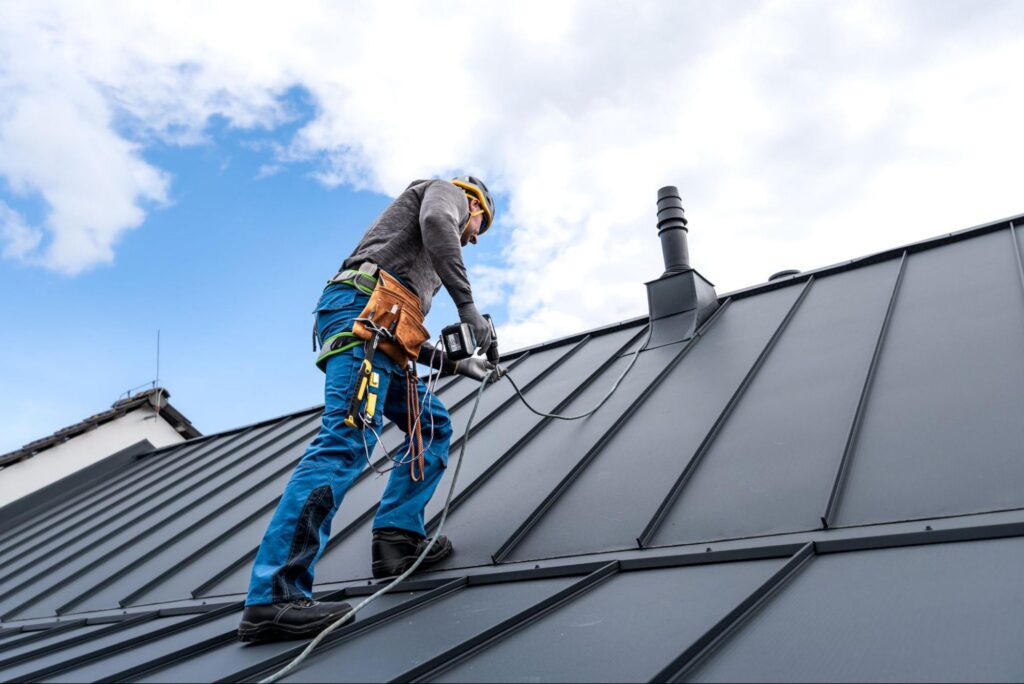
We have spent over ten years caring for commercial roofs across central and southern Georgia and the South Carolina Low Country. Our team understands what coastal weather does to every type of roofing system, and we offer inspections, repairs, coatings, and a full new roof installation when the time comes.
When you work with DBM Roofing, you get:
- A team with deep regional experience and proactive maintenance plans
- Honest, itemized estimates with no surprise fees
- Financing and insurance support for larger projects
- Documentation that supports your warranty and insurance claims
- A long-term partner for ongoing roof maintenance services and repair work
Your commercial roof is one of the largest investments on your property. A consistent plan of proactive roof maintenance protects that investment and keeps your business running without interruption. If you would like a thorough inspection or a custom maintenance program for your property, contact DBM Roofing for a free estimate.
Frequently Asked Questions
How often should I schedule regular roof maintenance?
Plan on two professional roof inspections each year, one in spring and one in fall, plus an extra walkthrough after any major storm. Regular inspections at this cadence are the standard recommendation for commercial properties in coastal climates.
How long does a commercial roof last in Georgia or South Carolina?
Lifespan varies by material. TPO roofing typically last for two to three decades, EPDM lasts around the same range, modified bitumen and built-up systems last 15 to 30 years, and metal roofing can last 40 to 70 years with proper maintenance.
Can a roof coating restore my warranty?
In many cases, yes. Several coating manufacturers offer renewable warranties on restored systems, often in the 10 to 20 year range, as long as the coating is applied by a qualified contractor and the roof passes inspection beforehand. We can walk you through the options for your specific membrane.
Can roof coatings extend the life of my commercial roof?
Yes. A quality roof coating can add years to a commercial roof, reduce cooling costs, and protect the underlying membrane from UV damage. Coatings work best on roofs that are still in fair condition and have not reached the end of their service life.
Will my insurance cover storm damage to a commercial roof?
In most cases, yes, as long as the damage is documented and your maintenance records show the roof was in good condition before the storm. Keeping a maintenance log and photos from each inspection makes the claims process much smoother.