
The Short Answer: Choosing the right roof shingle color comes down to matching your home’s exterior, picking shades suited to your climate, and avoiding trendy choices that will not age well. The best shingle color complements your siding, brick, and trim while supporting energy efficiency, curb appeal, and long-term resale value. Test shingle samples in various lighting conditions before you commit, lean toward popular roof colors with broad appeal, and remember that a roof is a long-term investment that should still look great a decade from now.
Picking a roof shingle color is more than a style decision. Your roof covers a huge portion of your home’s exterior, so the shade you pick affects curb appeal, indoor temperature, and even how quickly your home sells when the time comes.
Key Takeaways
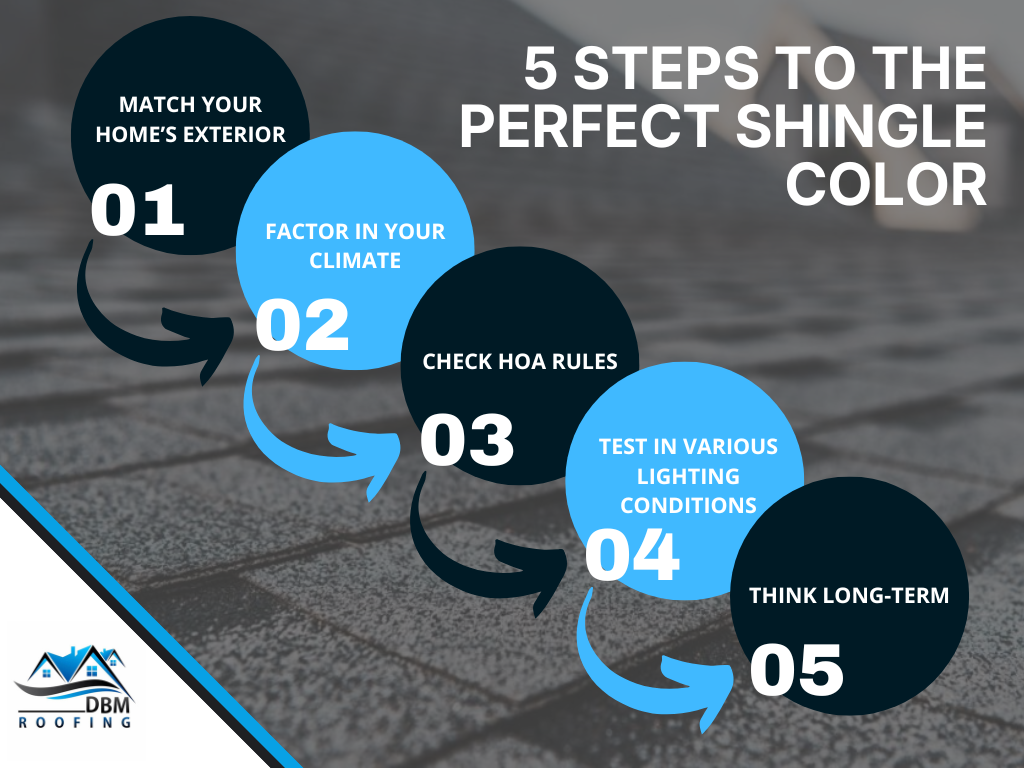
- Match shingles to your siding, trim, and natural materials
- Pick colors based on your climate, not passing trends
- Always test shingle samples outside in various lighting conditions
- Choose a color that will look good for decades, not just this season
Consider Your Home’s Exterior Elements
Your roof shingle does not exist in isolation. It works alongside siding, trim, doors, and even the garage to create the look of your home’s appearance. Getting these elements to harmonize is the first step toward picking the right shingle color.
Match With Siding and Trim
Your roof should complement, not compete with, the rest of your home’s exterior. A white home pairs beautifully with deep charcoal or a soft gray, while warmer-toned siding looks best with browns or earthy blends. The goal is a cohesive look where every element supports the others.
Coordinate With Brick, Stone, or Paint
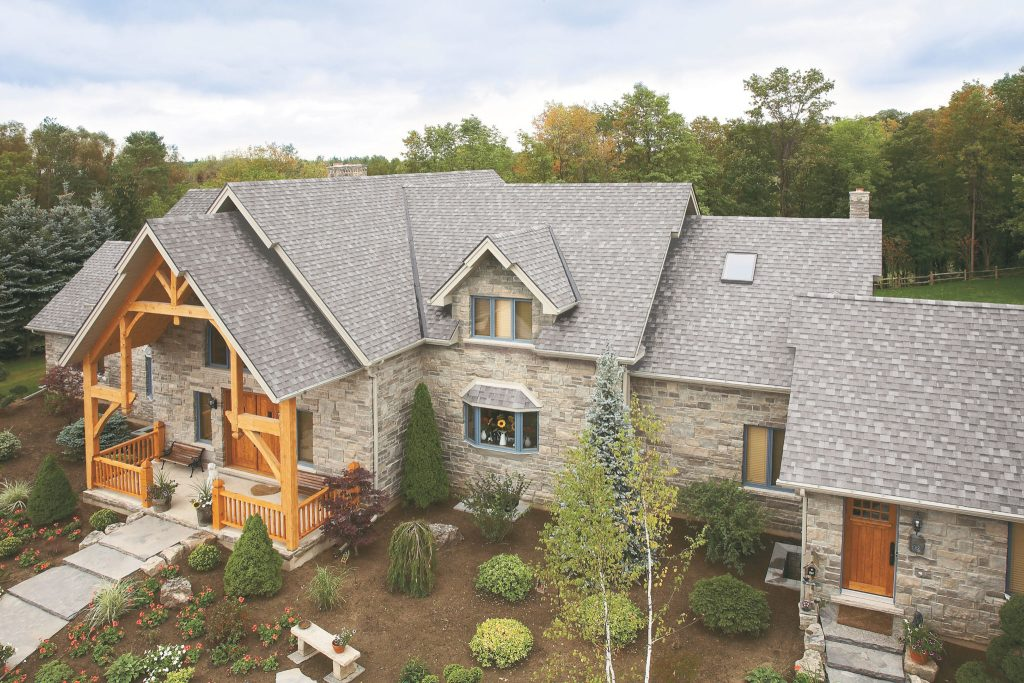
If your home features brick or stone, lean toward neutral shingle tones that will not fight the existing pattern. Painted homes give you more flexibility with color, but staying within a cohesive color family keeps everything looking intentional.
Stick to a Color Family
Cool tones work well with blues, grays, and slate. Warm tones love creams, tans, and browns. If you are uncertain which family your home’s siding falls into, grab a few sample boards and prop them against your home to see what feels right. Trust your eye, since it usually knows when a color blend works.
Think About Climate and Heat Reflection
The roof shingle color you choose impacts more than appearance. In a warm region like coastal Georgia or the South Carolina Low Country, color choice can directly affect your air conditioning bill.
Dark Versus Lighter Shades
Darker colors absorb sunlight, which can help melt snow in cold climates but turns attics into ovens in hot ones. Lighter shades reflect more sunlight and help keep your home cooler. A cool roof option, often available in lighter colors or specially engineered shingles, can reduce summer heat gain noticeably.
Energy Bills Feel the Choice
A lighter roof color bounces solar heat away from your home, giving your air conditioning a break. Over the lifetime of an asphalt shingle roof, that energy savings adds up.
Match Your Climate, Not a Trend
A deep charcoal might look stunning online, but it is not always the smartest pick for a southern zip code. Your roof should work with your weather, not against it.
Pro tip: If your attic already runs hot, picking a darker shingle color will only make it worse. The right roof shingle color, paired with good attic ventilation, is a simple way to make your home more comfortable year-round.
Check Your Neighborhood Guidelines or HOA Rules
Before you commit to a shingle color, make sure it is actually allowed. HOAs and neighborhood associations often restrict roof colors to maintain a consistent look across the community.
- Some colors might be off-limits. That bold slate blue you love could be a no from the board.
- Skip the costly redo. Breaking the rules can lead to fines or a forced roof replacement.
- Stand out without going rogue. Pick a popular roof color that fits the neighborhood while still giving your home some personality.
Visualize the Shingles in Various Lighting Conditions
The sample you grabbed from the showroom is not the full picture. Shingle colors can shift considerably depending on the light.
Take your shingle samples outside and view them in full sun, in shade, and on cloudy days. Some popular roof colors look stunning in direct sunlight but feel flat in overcast conditions. Tilt the samples the way they would sit on your actual roof, since light hits a sloped surface differently than a flat hand.
A sample board or shingle swatch held against your home’s siding for a few days gives you a much truer sense of how the color will read once installed. This step takes a little patience, but it saves you from regret after a full roof replacement.
Think Long-Term Appeal and Resale Value
That deep green might feel fresh today, but will it still look great a decade from now?
If you plan to sell at some point, lean toward classic shades like black, brown, or gray. These popular roof colors work with almost any architectural style and appeal to a wide range of buyers. A bold roof shows personality, but it can also turn off potential buyers when you list. Think of your roof color like a tattoo, since it should still make sense years down the road.
Popular Roof Shingle Color Options
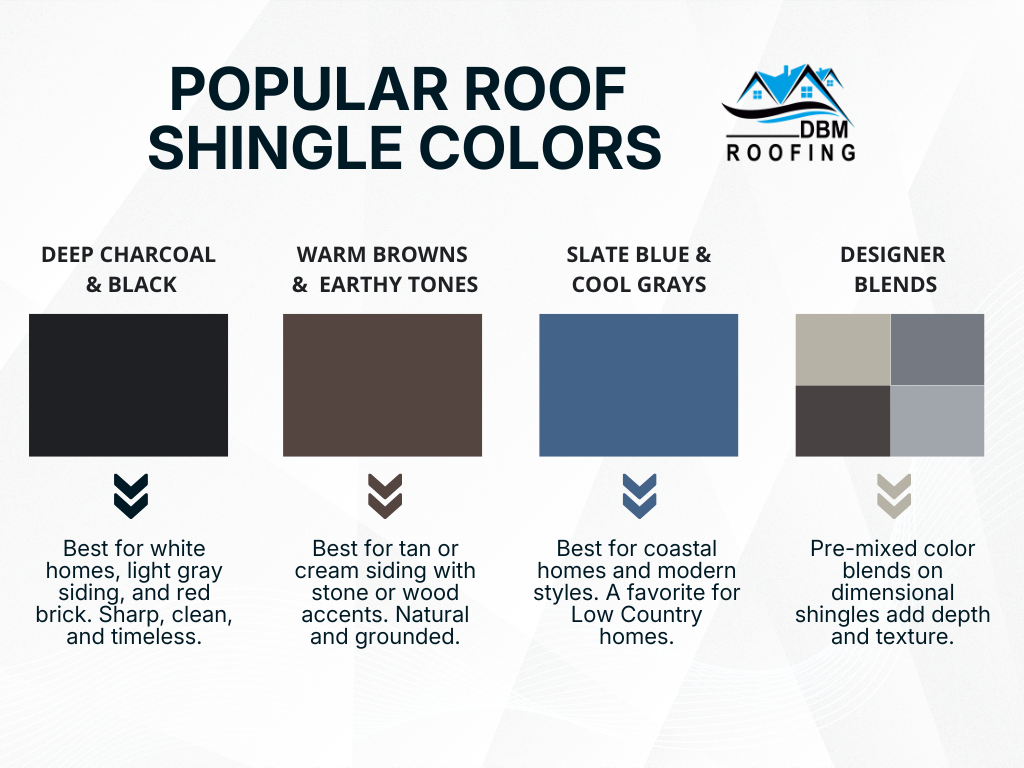
Here are some of the most popular roof colors and where they tend to shine:
- Charcoal and black tones: Sharp, clean, and versatile. These work well with white, gray, or brick exteriors and hide dirt with ease.
- Warm browns and earthy shades: Tan, chestnut, and deep brown feel grounded and natural. They suit traditional homes and pair well with stone or wood siding.
- Slate, blue, and cool grays: Cool tones create a relaxed, modern feel. They complement coastal homes and minimalist styles, working beautifully with cream or soft gray siding.
- Bold blends and designer colors: Dimensional shingles and architectural shingles often come in blended tones, such as gray with copper hints or green undertones. A good color blend adds depth and texture without shouting for attention.
When you are picking the perfect shingle, also consider whether you want standard three-tab or an architectural shingle. Architectural styles tend to be thicker, offer better impact resistance, and come with stronger limited warranty coverage from the manufacturer.
Tips for Making the Final Decision
Use Visualizer Tools
Most major shingle brands offer online visualizers that let you test shingle colors on sample homes. It is a low-stakes way to narrow down your options before bringing home physical shingle samples.
Test It in Real Life
Once you have a shortlist, request physical samples and check them on your actual roof line. Look at them in sun, shade, and cloud cover. This is the only way to see what you are really signing up for.
Get a Second Opinion
Ask your roofing contractor or someone whose style you trust. A green roof, deep charcoal, or warm brown each carries a different feel, and a fresh set of eyes can confirm your gut.
Trust Your Gut
Trends come and go, but you are the one living with the roof. Pick a color you will be excited to see every time you pull into the driveway.
Ready To Pick the Perfect Shingle Color?
Choosing the right roof shingle color is a decision that will shape your home’s appearance for decades. From temperature control to curb appeal, the right roof color should support how you live in your home, not just how it looks in photos.
At DBM Roofing, we have helped homeowners across Georgia and the South Carolina Low Country pick the right roof shingle color and install asphalt shingle roofs that hold up against coastal weather, humidity, and storms. If you are planning a new roof or full roof replacement, our team offers a free consultation to walk you through shingle samples, popular roof colors, and the options that will suit your architectural style and budget.
Reach out to schedule your free consultation, and let us help you choose a roof shingle color you will love for years to come.
Frequently Asked Questions
What shingle color adds the most value?
Neutrals like gray, black, and brown are the safest bets for resale. They work with most home exteriors and appeal to a wide range of buyers across the United States.
Do lighter shingles really keep homes cooler?
Yes. Lighter shades reflect more sunlight, lowering attic temperatures and reducing the load on your air conditioning.
Should the roof be darker than the home's siding?
Usually yes. A darker color on the roof gives the home visual weight. Go lighter if your home is small or sits in deep shade.
Can I mix shingle colors?
You can, but do it with purpose. Blended dimensional shingles are designed for this, so stick with pre-mixed options unless you are working with a professional.