
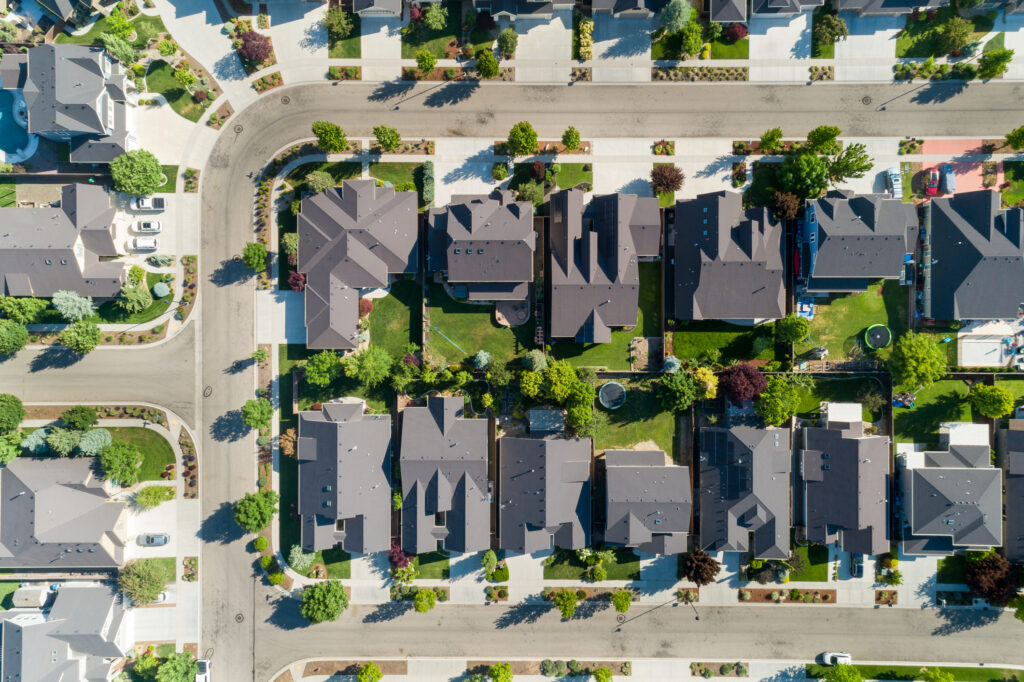
Picking a new roof involves more decisions than most homeowners expect. Beyond color and price, you’re choosing between different roof types that each handle weather conditions, energy costs, and long-term maintenance differently. The right combination of roofing material and roof style can protect your home for decades, while the wrong match can lead to costly problems down the road.
This guide walks through the most common types of roofs you’ll encounter, breaks down popular materials, and helps you figure out which options make sense for your home or commercial building in Georgia and the South Carolina Low Country.
Understanding Roof Styles and Shapes
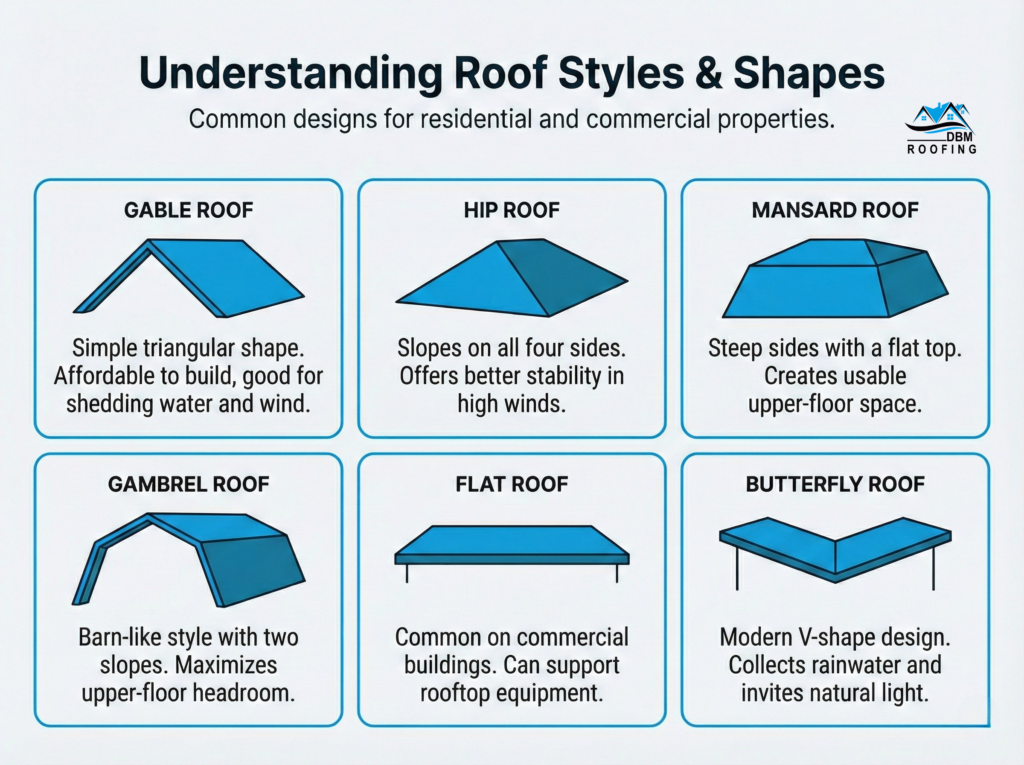
The shape of your roof affects everything from how well it sheds rain to how much additional space you get in your attic. Here are the most popular roof styles for residential buildings and commercial properties in the United States.
Gable Roof: The gable roof is the most recognizable roof type in the country. Its simple triangular shape makes it effective at shedding water and handling high wind, and it’s one of the most affordable styles to build. You’ll see gable roofs on homes throughout Savannah, Richmond Hill, and the surrounding areas.
Hip Roof: A hip roof (sometimes called a hipped roof) slopes on all four sides, which gives it better stability in harsh weather conditions than a standard gable. This makes the hip roof a smart option for coastal homeowners who deal with hurricane-season winds. The tradeoff is a slightly higher construction cost and a bit less attic space.
Mansard Roof: The mansard roof features a steep slope on each side with a nearly flat section on top, creating usable additional space on the upper floor. This design originated in France and adds strong aesthetic appeal to both residential and commercial properties.
Gambrel Roof: Similar to a mansard, the gambrel roof has two distinct slopes on each side. You’ll often see this roof type on barns and farmhouses, but it works well for homes where maximizing upper-floor space is a priority.
Flat Roof: Flat roofs are common on commercial buildings and industrial buildings, though some modern homes use them too. A flat roof (technically a lower slope roof) can support solar panels, rooftop gardens, and HVAC equipment. They require specific roofing systems like built-up roofing or single-ply membrane systems to prevent water pooling.
Butterfly Roof: The butterfly roof is a modern, V-shaped design that angles downward toward the center. It’s great for collecting rainwater and inviting natural light through large windows. While less common in our region, it’s gaining attention for its energy efficiency and visual impact.
Roofing Materials: What’s on Top Matters Most
Once you’ve settled on a roof shape, the roofing material you choose determines how long it lasts, how it performs in your climate, and what you’ll spend on regular maintenance over the years.
Asphalt Shingles
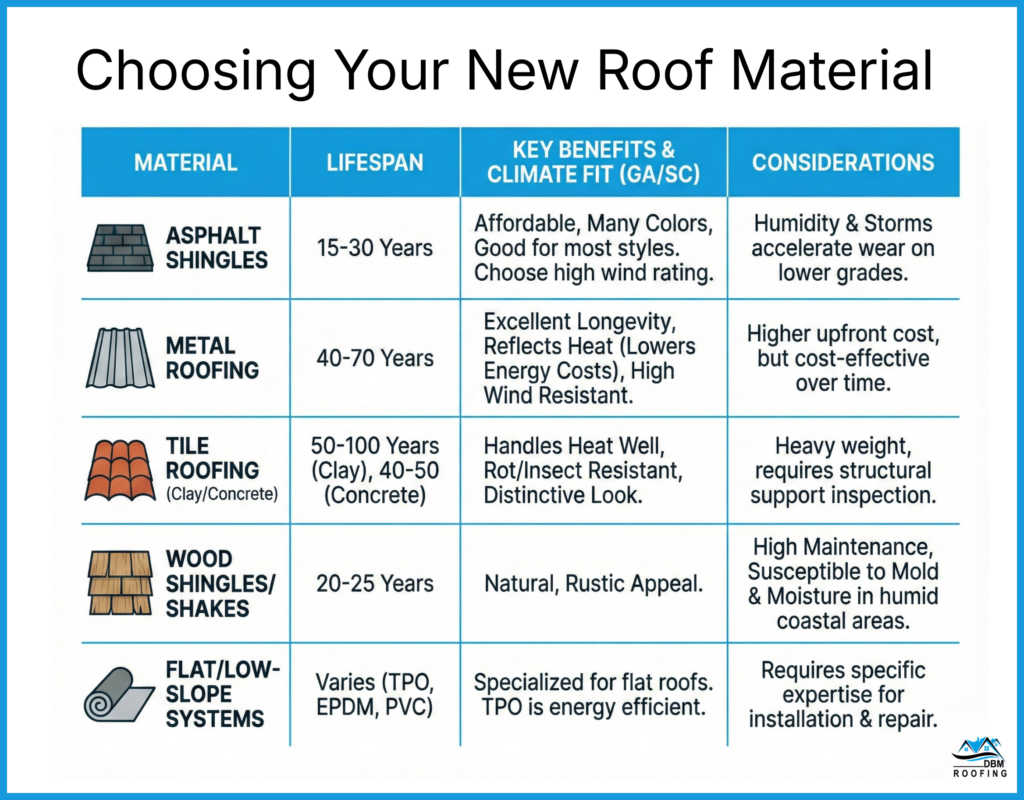
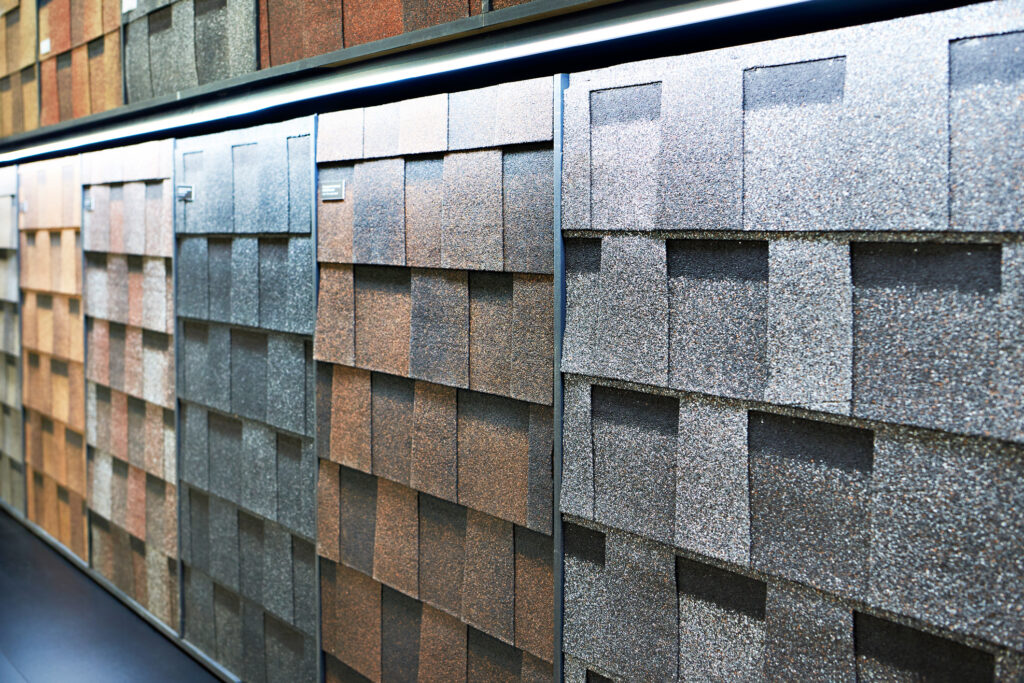
The asphalt shingle is the most popular roofing material in the United States, and for good reason. It’s affordable, comes in a wide range of colors, and works well on most roof styles. Shingle roofs typically last 15 to 30 years depending on the grade you choose, with architectural shingles offering better performance and longevity than basic 3-tab options.
For homeowners in Georgia’s coastal climate, look for shingles rated for high wind resistance. The humidity and storm activity in areas like Hinesville and Brunswick can accelerate wear on lower-quality products.
Metal Roofing
Metal roofing has grown in popularity across the Southeast for its longevity and performance. A metal roof can last 40 to 70 years with minimal upkeep, and it reflects solar heat, which helps lower energy costs during our long, hot summers. Metal roofs also stand up exceptionally well to high wind and storm damage.
Standing seam, corrugated panels, and metal shingles are the most common options. If you’re considering a metal roof for a commercial property, the long lifespan and low maintenance costs often make it a cost-effective investment over time.
Tile Roofing
Tile roofing includes both clay tile and concrete tile options. Clay tile roofs are known for their distinctive look and can last 50 to 100 years in the right conditions. Concrete tile offers similar performance at a lower price point, typically lasting 40 to 50 years.
Both types of tile roof handle heat well and resist rot and insect damage. One thing to keep in mind: tile is heavy, so your roof structure needs to support the extra weight. A professional inspection can determine if your home is a good candidate.
Wood Shingles and Shakes
Wood shingles and wooden shingles (sometimes called shakes) offer a natural, rustic aesthetic appeal that many homeowners love. Cedar is the most common wood species used. These roofs typically last 20 to 25 years, but they demand more regular maintenance than other materials. In humid coastal areas, wood is more susceptible to mold and moisture damage, so it may not be the best fit for every home in our service area.
Flat Roof and Low-Slope Systems
Flat and lower slope roofs on commercial buildings and some modern homes require specialized roofing systems. The most common options include:
- Single-ply membrane: Materials like TPO (thermoplastic polyolefin), PVC, and EPDM are lightweight and offer strong weather resistance. TPO in particular has become a go-to for commercial properties because of its energy efficiency and reflective properties.
- Built-up roofing (BUR): This system uses multiple layers of bitumen and reinforcing fabrics to create a finished membrane. Built-up roofing is a time-tested choice for flat roofs on industrial buildings and large commercial properties.
- Modified bitumen: A modified bitumen roofing system combines the layered approach of BUR with modern polymer technology for improved flexibility and performance.
Other Options Worth Knowing
Green Roof: A green roof features a layer of vegetation planted over a waterproof membrane. It improves energy efficiency, manages stormwater, and adds a unique look. Green roofs are more common on commercial buildings but are appearing on some residential projects as well.
Cool Roof: A cool roof uses reflective materials or coatings to reduce heat absorption. In the Georgia heat, a roof coating can meaningfully lower energy costs and reduce strain on your HVAC system.
How to Choose the Right Roof Type for Your Property
With so many different types of roofs available, narrowing down the right option comes down to a few key factors.
Climate and weather conditions: Living in coastal Georgia or the South Carolina Low Country means your roof faces humidity, salt air, intense sun, and the potential for tropical storms. Materials that resist moisture and perform in high wind should be at the top of your list. Metal roofing, asphalt shingles rated for wind resistance, and single-ply membrane systems all handle these conditions well.
Roof slope and structure: Your existing roof slope can limit which materials work. Asphalt shingles and metal roofing perform best on a steep slope, while flat and low-slope roofs need membrane or built-up systems. A tile roof requires adequate structural support due to its weight.
Budget and long-term value: Asphalt shingles cost less upfront, but a metal roof or tile roof may save money over time through longer lifespan and lower maintenance costs. Think about total cost of ownership rather than just the initial price tag. DBM Roofing offers financing options to help make premium materials more accessible.
Aesthetic appeal and neighborhood fit: Your roof accounts for a large portion of your home’s visible exterior. Consider how different roof types and materials complement your home’s architecture and your neighborhood’s character.
Let DBM Roofing Help You Make the Right Choice
Choosing between different roof types is a big decision, and you don’t have to figure it out alone. DBM Roofing brings over a decade of experience helping homeowners and business owners across Savannah, Statesboro, Mount Pleasant, Charleston, and the surrounding region choose the right roofing system for their property and budget.
From residential roof replacement to commercial roofing repair, we’ve worked with every type of roof covered in this guide and can give you honest recommendations based on your specific situation. Reach out to our team for a professional assessment and a clear plan for protecting your home or business.