
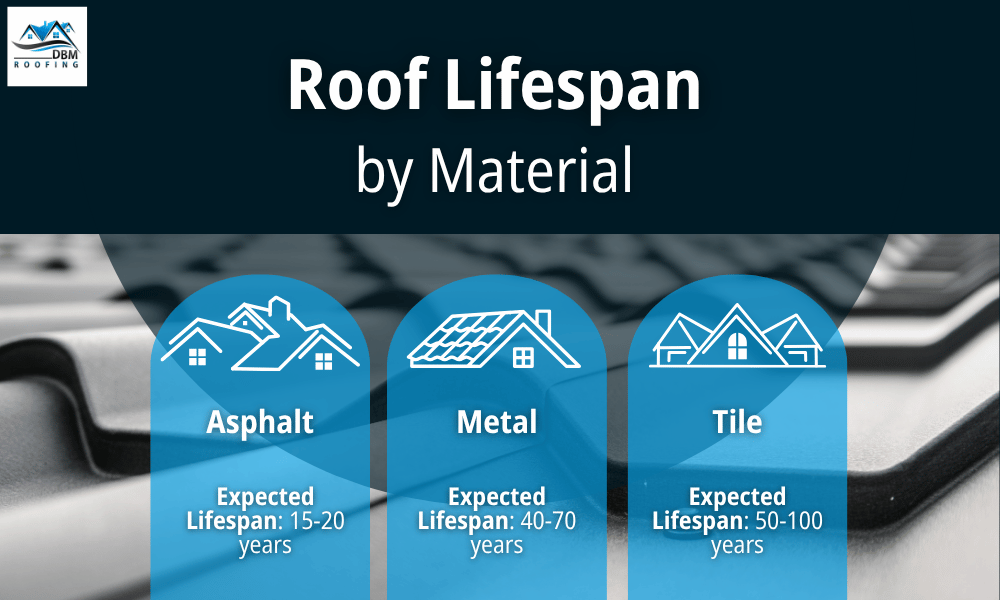
The short answer: Roof lifespan varies dramatically based on the material you choose. A standard asphalt shingle roof typically lasts 15-20 years, while premium options like tile roofs can last 50-100 years, and slate roofs can protect your home for a century or more. Metal roofs fall somewhere in the middle at 40-70 years.
But here’s what many homeowners don’t realize: the material is just the starting point. Weather conditions, installation quality, and how well you maintain your roof can add or subtract years from these estimates. A well-maintained asphalt shingle roof in a mild climate might outlast a neglected metal roof in an area prone to harsh weather conditions.
Understanding these factors helps you plan for the future, budget appropriately, and know when to start thinking about roof replacement versus continuing with repairs. Let’s dig into what determines how long your roof will actually last and what you can do to get the most years out of your investment.
Breaking Down Lifespan by Roofing Material
The roofing material you choose is the biggest factor in determining your roof’s lifespan. Here’s what you can expect from different options:
Asphalt Shingles: The Popular Choice
Most residential homes across the United States have asphalt shingle roofs because they offer a good balance of affordability and performance. If you have 3-tab shingles, expect an average lifespan of 15-20 years. Composite shingles, also called architectural shingles, are thicker and more durable with a life expectancy of 25-30 years.
These shingle roofs work well for many homeowners, but they have the shortest roof lifespan among common roofing materials. The protective granules on the surface wear away over time, especially in areas with harsh weather.
Metal Roofing: Built to Last
A metal roof offers impressive longevity at 40-70 years. Metal roofing has become increasingly popular because it requires low maintenance and performs exceptionally well in storm damage situations. High winds and extreme weather that might tear off asphalt shingles typically won’t faze a properly installed metal roof.
The upfront cost is higher than composite shingles, but when you factor in the life expectancy, many homeowners find metal roofing to be cost-effective over time.
Tile Roofs: Premium Performance
Tile roofs are among the longest-lasting options available. Clay tile roofs can last 50-100 years with proper maintenance, while concrete roof tiles typically provide 40-50 years of protection. These materials excel in hot climates and areas with severe weather conditions.
One consideration: tile roofs are heavy, so your roof deck needs to be structurally sound to support the weight. A professional roof inspection can confirm whether your home is a good candidate.
Other Materials Worth Knowing
Wood shingles offer natural beauty with a lifespan of 20-25 years, though they require more maintenance than other options. Flat roof systems, common on commercial buildings and some modern homes, typically last 15-25 years depending on whether they use EPDM rubber, TPO, or modified bitumen membranes.
What Really Impacts How Long Your Roof Will Last
Two homes with identical roofing materials can have vastly different roof lifespans. Here’s why:
Climate and Weather Take Their Toll
The weather conditions in your area play a huge role. Homes in coastal regions face salt air corrosion. Desert properties deal with intense UV exposure that breaks down protective granules on asphalt shingle roofs faster. Areas prone to harsh weather conditions like hurricanes, hail storms, or heavy snow see more frequent roof damage.
Storm damage from fallen branches, flying debris, or ice dams can suddenly shorten an otherwise healthy roof’s life. Even less dramatic environmental factors matter: constant sun exposure in the south versus freeze-thaw cycles in northern climates each present unique challenges.
Installation Quality Matters More Than You Think
The difference between proper installation and sloppy work can cost you 10-20 years of roof lifespan. When a roofing contractor cuts corners on underlayment, doesn’t properly flash valleys and penetrations, or fails to follow manufacturer specifications, you’re setting up for premature failure.
Maintenance Makes or Breaks Longevity
Regular maintenance versus neglect can mean the difference between reaching your roof’s expected life expectancy and needing early roof replacement. Here’s what this looks like in practice:
Well-maintained roofs: Annual roof inspections catch potential problems early. Missing shingles get replaced promptly. Gutters stay clean, preventing water damage. Minor repairs happen before they become major issues.
Neglected roofs: Small problems go unnoticed until they cause roof leaks. Water damage spreads through the roof deck. What could have been a simple fix becomes a full roof replacement.
Your Surroundings Play a Role
Environmental factors specific to your property also matter. Trees provide shade that can extend asphalt shingle life by reducing UV exposure, but overhanging branches that drop debris and hold moisture against your roof do more harm than good. Proper attic ventilation helps regulate temperature and moisture, while poor ventilation can literally cook your shingle roof from underneath.
Keeping Your Roof Healthy for Maximum Years
Getting the full life expectancy from your roofing material isn’t about luck. It’s about consistent care:
Schedule Regular Inspections
Annual roof inspections are your best defense against premature failure. A professional roof inspection catches issues like missing shingles, deteriorating flashing, or early signs of a roof leak before they cause serious water damage to your home’s interior.
After severe weather conditions like hail storms or hurricanes, schedule an additional inspection even if you don’t see obvious damage from the ground. Storm damage isn’t always immediately visible.
Basic Maintenance Tasks That Add Years
Simple regular maintenance tasks make a real difference:
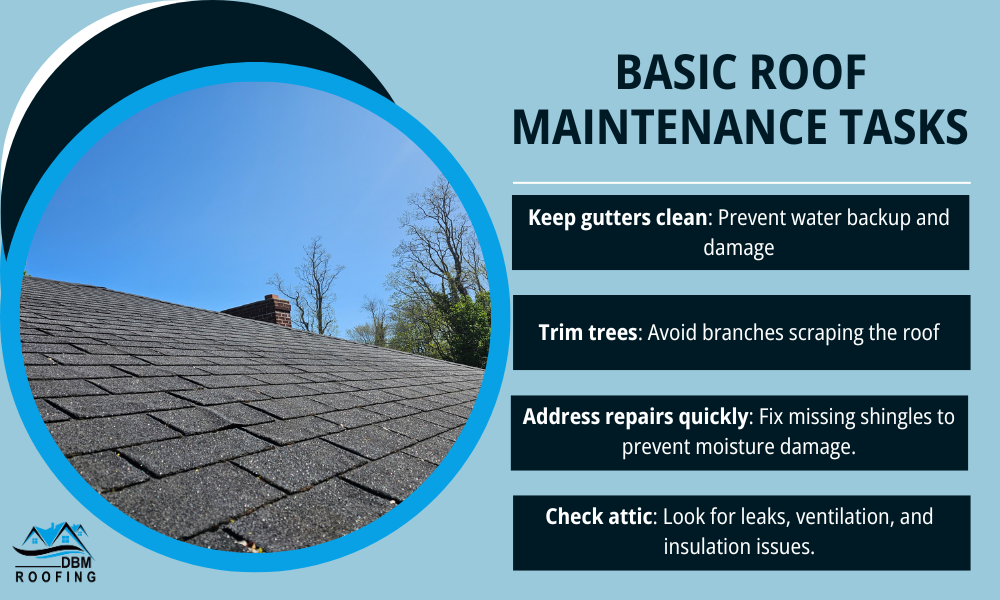
- Keep gutters clean: Clogged gutters cause water to back up under roof tiles and shingles, leading to water damage in the roof deck and fascia
- Trim nearby trees: Prevent branches from scraping your roof or dropping debris that holds moisture
- Address minor repairs quickly: That one missing shingle might seem insignificant, but it exposes the roof deck to moisture and can lead to bigger problems
Check your attic: Look for signs of roof leaks, proper ventilation, and adequate insulation
Knowing When It’s Time for Roof Replacement
Even well-maintained roofs eventually reach the end of their useful life. Watch for these warning signs:
- Your roof is approaching its life expectancy: If your asphalt shingle roof is 18-20 years old or your metal roof is nearing 50 years, start planning for replacement even if everything looks fine.
- Multiple problem areas: One roof leak might warrant repair, but if you’re dealing with multiple issues across different sections, roof replacement often makes more financial sense than repeated minor repairs.
- Widespread missing shingles: After harsh weather, losing a few shingles is normal. But if you’re consistently seeing missing shingles across large areas, the roof is telling you it’s failing.
- Visible sagging or structural concerns: Any sagging indicates potential roof deck problems that need immediate attention. This goes beyond the roofing material itself and points to structural issues.
- Water damage keeps appearing: If you’ve had repairs done but still experience roof leaks and interior water damage, you’re past the point where repairs make sense.
Choosing the Right Partner for Your New Roof
When it’s time for a new roof, the roofing contractor you choose directly impacts how long that roof will last. Proper installation is just as important as the roofing material you select.
DBM Roofing brings over a decade of experience serving homeowners across central and southern Georgia and the South Carolina Low Country. We understand how weather conditions in our region affect roof lifespan. Our team has installed everything from asphalt shingle roofs to metal roofing and tile roofs, and we know what it takes to ensure proper installation that delivers the full life expectancy you’re paying for.
When you invest in a new roof, you deserve a roofing contractor who stands behind their work and has the expertise to get it right the first time. We offer comprehensive roof inspections to assess your current roof condition, honest assessments about whether you need roof replacement or if minor repairs will suffice, and quality workmanship that prioritizes long-term performance over quick installation.
Your roof protects everything you’ve worked hard to build. Understanding how long it should last and what factors influence that lifespan puts you in control of maintaining your home’s most important defense against the elements. If you’re unsure about your roof’s condition or think it might be time for an inspection, reach out to DBM Roofing. We’ll give you straight answers about what your roof needs and help you make the best decision for your home and budget.